
Best Gaming Headset: Wireless vs Wired Performance Guide
Sound Quality: The Closing Gap
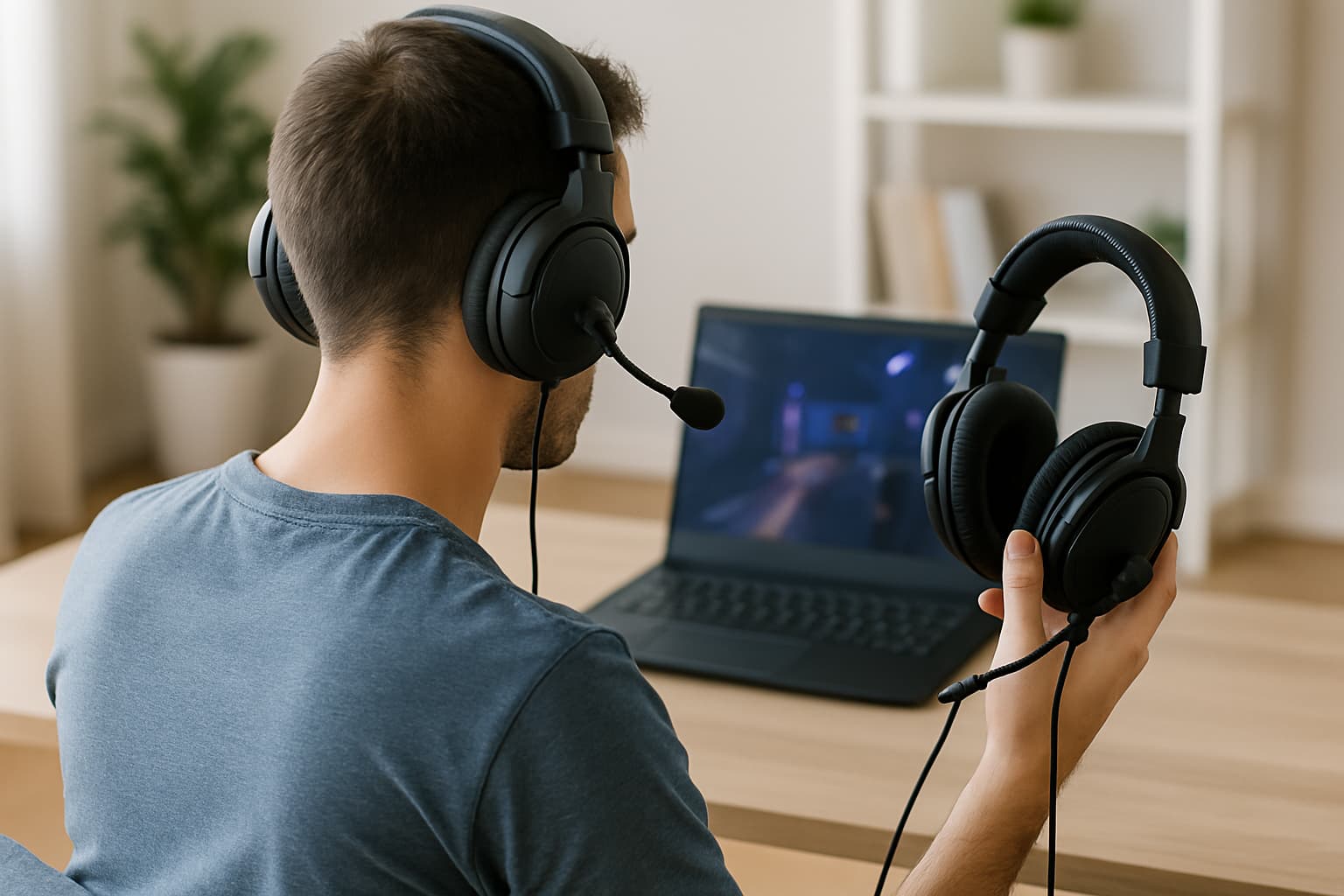
The core advantage of wired headsets has always been uncompressed audio. Wired sends an uncompressed analog signal through the cable, with quality depending on the headset's drivers and the DAC (digital-to-analog converter) in whatever device you're plugged into. This means wired has a marginal edge in pure audio fidelity, especially at budget price points, but premium wireless models have largely closed the gap.
However, modern wireless technology has evolved dramatically. Wireless headsets in 2026 use advanced digital signal processing that has narrowed the quality gap considerably, with premium 2.4GHz models from brands like Razer, ASUS, and Acer now delivering audio quality that, in blind listening tests, most users cannot distinguish from wired equivalents.
The real difference comes down to how you're listening. 2.4GHz wireless headsets encode and decode audio digitally, but high-quality codecs make the process nearly transparent, and at comparable price tiers, most gamers will not hear a meaningful difference between wired and 2.4GHz wireless during actual gameplay.
Where the gap widens: Bluetooth is a different story—standard Bluetooth codecs compress audio more aggressively, which can muddy details like enemy footsteps or directional cues, making 2.4GHz wireless the only real option for gaming.
Latency: Nearly Irrelevant Now
The latency myth needs busting. In 2024, latency is no longer the decisive flaw it once was for wireless gaming headsets, thanks to advancements in 2.4GHz RF technology—today's dedicated 2.4GHz wireless systems, like those using proprietary dongles from Logitech, SteelSeries, or Razer, have reduced this dramatically.
2.4GHz wireless technology delivers latency lower than 20 milliseconds, virtually imperceptible to the human ear. Meanwhile, wired connections deliver near-zero delay, ideal for competitive gaming. In practical terms, latency under 40ms is considered good for competitive gaming, while under 20ms is excellent, and anything over 100ms can be noticeable and impact performance.
The real culprit to avoid is standard Bluetooth. Standard Bluetooth connections typically suffer from a latency of 150 to 200 milliseconds—in a fast-paced shooter, a 200-millisecond delay means you hear enemy footsteps long after the enemy has already entered your screen.
Verdict: If you're buying wireless, insist on 2.4GHz proprietary connection, not Bluetooth. If you're buying wired, you won't notice a real-world difference during gameplay.
Connectivity and Compatibility
This is where type of gaming matters most. Wired headsets still have versatility and multiplatform use over wireless sets. You can plug wired headsets into any console, computer, or mobile device with a 3.5mm jack.
Wireless headsets demand compatibility checks. Many are designed for specific ecosystems—some work best on PlayStation, others on Xbox or PC. The Arctis Nova 7 comes in three versions: the standard Nova 7 works on PC, Switch, and mobile, the 7P supports all those devices plus PS5, and the 7X supports Xbox.
The upside of wireless: Modern headsets handle battery life well, with top models pushing 80 hours per charge. Wired eliminates this concern entirely. Wired headsets won't require charging, so they'll never run out of juice when you want to play.
Price: Wired Wins at Budget
Wireless gaming headsets tend to be more expensive but provide the freedom of cord-free gaming, while wired headsets with the best sound quality are more affordable. Wired gaming headsets offer good options that won't break the bank—for a casual gamer with no compromise on sound quality, wired headsets are available for around half the cost of a comparable wireless headset.
Microphone Quality
Surprisingly, microphone quality isn't determined by connection type. Mic quality depends far more on the headset itself than on the connection type—wired and wireless headsets can both deliver excellent or poor microphone performance depending on the design, and dedicated boom mics consistently outperform inline or built-in options regardless of how the headset connects.
Top Picks by Category
Best Wireless Overall
The Arctis Nova 7 offers the best mix of sound quality, features, and comfort without pushing into luxury-tier prices. It features 38 hours of battery life, 2.4GHz connectivity plus Bluetooth, spatial audio support, and a retractable noise-canceling boom mic.
Best Premium Wireless
The SteelSeries Arctis Nova Pro Wireless features low-latency 2.4GHz, Bluetooth 5.0, solid noise cancellation, excellent base with plenty of functionalities, and amazing audio.
Best Budget Wireless
The Corsair HS55 Wireless is priced at $99.99, includes 24-hour battery life, Bluetooth & 2.4GHz wireless, and Tempest 3D audio support for PS5.
Best Wired Overall
The Epos H3 is the all-round best wired gaming headset thanks to its incredibly comfortable design and makes the audio from your games sound crisp and clear, coming in at just under $100.
Best Premium Wired
The SteelSeries Arctis Nova Pro has an MSRP of $279.99 and offers great sound quality, a good microphone for in-game chat, and all-around enjoyable features.
Best Budget Wired
The Razer Kraken V3 has an MSRP of $99.99 and is a PC-first headset with THX Spatial Audio and excellent sound tuning via Synapse software, with a bass-heavy profile that you can adjust to taste and a sturdy build that's comfortable for marathon sessions.
The Verdict: Which Should You Buy?
For most gamers in 2026, wireless 2.4GHz headsets offer near-imperceptible latency and now match wired in sound quality, making them the better all-around pick for most gamers. Go wireless if you value freedom of movement, don't want to manage battery anxiety, and can afford the premium cost.
Choose wired if you play in fixed locations (desk setup), want maximum reliability without worrying about batteries or dropped connections, or operate on a tighter budget. Wired gaming headsets still rule for reliability, zero latency, and consistent audio quality—you don't have to worry about charging, firmware updates, or dropped connections.
The real takeaway: the headset model matters far more than whether it's wired or wireless. Both connection types can deliver excellent gaming audio today.