
Best Portable Dehumidifier for Home: Capacity, Drainage & Features
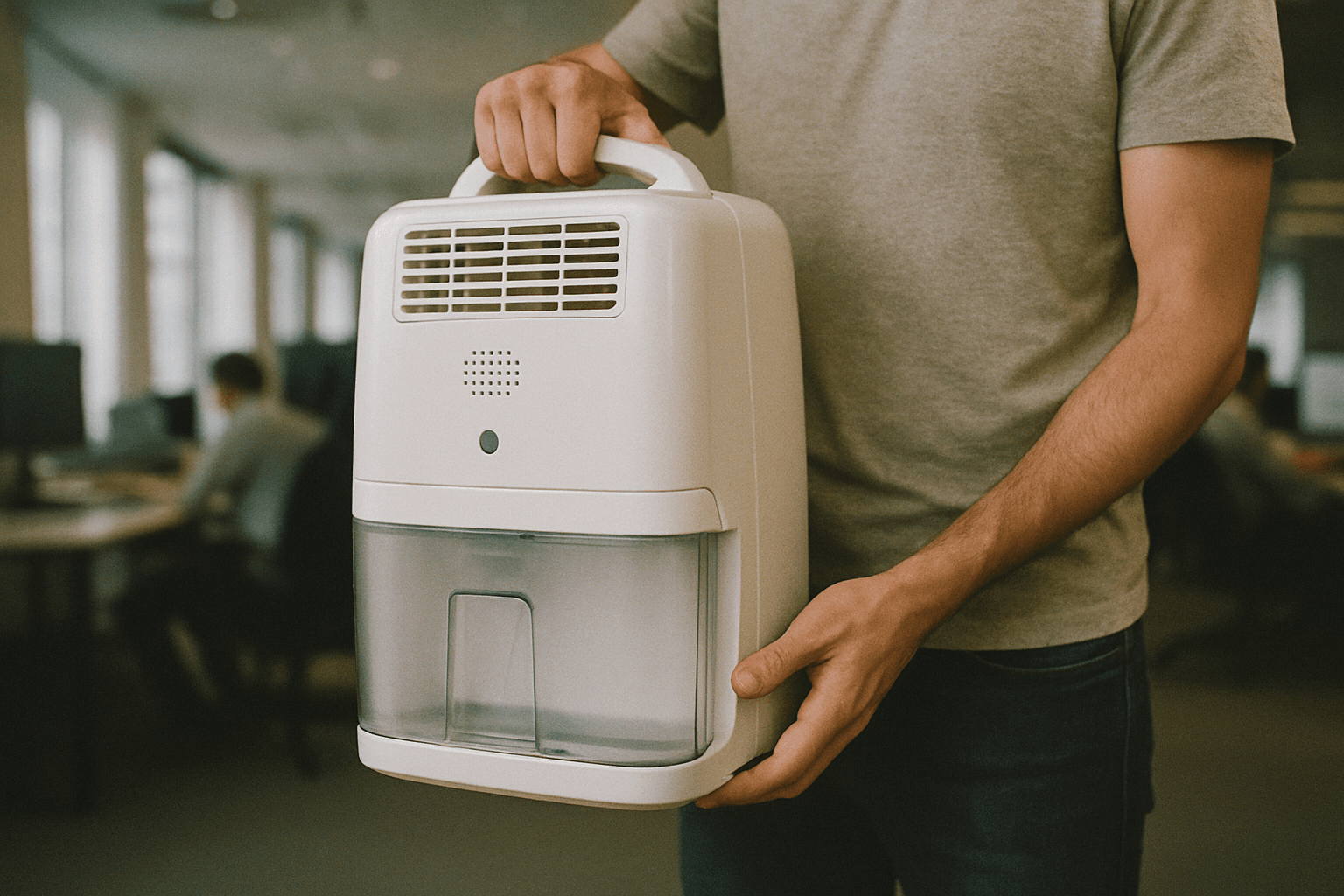
Understanding Dehumidifier Capacity and Sizing
The most critical metric for choosing a dehumidifier is its capacity, measured in pints of moisture removed per day. Dehumidifiers are sized by their total moisture removal capacity, which is rated in pints of moisture removed per day over a 24-hour period. However, capacity alone doesn't tell the whole story—you also need to match it to your room's actual humidity conditions.
The smallest portable models are typically rated for around 10 to 12 pints, good for putting under desks or keeping small laundry rooms drier, but they're not suitable for any significant moisture problems. For larger applications, dehumidifiers usually rated around 20 to 22 pints work best in larger rooms like bedrooms and may also be suitable for bathrooms and kitchens where a lot of moisture tends to accumulate.
Dehumidifiers rated at around 30 to 35 pints are suitable for an apartment, small home, or open living space around 1,500 to 2,000 square feet. For even larger spaces, dehumidifiers designed to remove about 50 pints of water per day are best for large spaces or medium-sized areas with persistent humidity problems.
The key is matching capacity to both room size and dampness level. For spaces under 2,000 sq ft, the published starting ranges are 20–30 pints/day for slightly/moderately damp, 25–40 for very damp, and 30–50 for wet conditions.
Room Dampness Matters More Than Square Footage Alone
Many people assume square footage is the only factor in sizing a dehumidifier, but that's not accurate. A small space with copious moisture may need the same capacity dehumidifier as a large space with only moderate excess humidity.
To upsize from the baseline capacity, if your home is located in a humid climate, add 10 pints; if multiple people live in the space, add 5 pints; if there are multiple doors and windows, add 5 pints; and if there's a washer and dryer nearby, add 5 pints.
When in doubt, sizing up is generally safer. ENERGY STAR advises that it is generally better to oversize than undersize a portable dehumidifier; if your room sits near the top of a published capacity range, has a high ceiling, or has persistent moisture, choosing toward the upper end gives more moisture-removal headroom.
Refrigerant vs. Desiccant: Two Different Technologies
The two main types of portable dehumidifiers use different technologies, each with distinct advantages.
Refrigerant Dehumidifiers
The most popular portable dehumidifier for homes is the refrigerant dehumidifier, also known as a condensing dehumidifier, which is best for very hot and humid environments since it will rely on temperature to dry the air. For most large or highly humid spaces, refrigerant models perform better and are more cost-effective.
However, refrigerant units have temperature limitations. These units are most effective in temperatures ranging from 60°F to 90°F; performance may decline outside this range, particularly in colder climates.
Desiccant Dehumidifiers
Desiccant units use a chemical