
Best Smart Garage Door Opener: Top Models & Installation Guide
What Is a Smart Garage Door Opener?
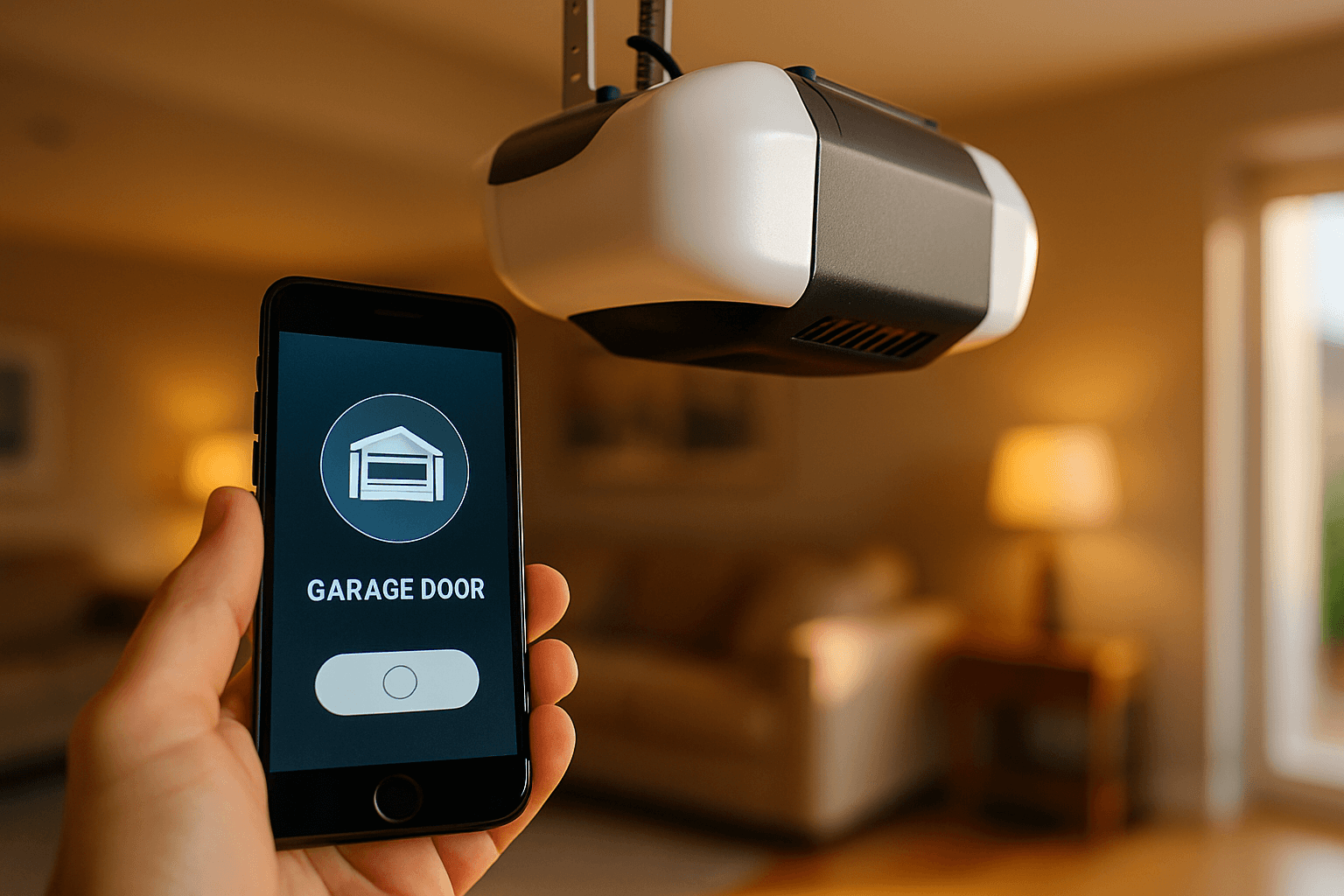
Smart garage door openers work by communicating with the sensors of your garage door and using your home's Wi-Fi network to send you updates via an app on your smart device. A smart garage door opener connects to your existing garage door and links to your Wi-Fi network so you can monitor it from anywhere, ensuring you didn't forget to close it.
There are three ways to get smart control of your garage door in 2026:
- Buy a new smart opener—Replace your existing opener with a model that has smart features built in. Most major brands now ship with some form of Wi-Fi control.
- Add a smart controller to your existing opener—A small device wires into your current opener and gives it app, voice, or automation control. Works on most openers manufactured after 1993.
- Use a retrofit hub—Mount a smart hub that communicates with your existing door system without replacing the opener itself.
Installation Requirements and Compatibility
Before you start, verify your setup can support a smart garage door opener. You can install a smart opener on any garage door made after 1993 that has safety sensors and a Learn button on the motor unit. Check your opener for a purple or yellow Learn button and verify that safety sensors exist on both sides of the door near the floor.
Most garage door opener brands are compatible with myQ technology if the model was manufactured after 1993. These garage openers will usually have safety sensor eyes. Openers older than 1993 typically lack the necessary wiring terminals for smart controller compatibility.
Wi-Fi connectivity is critical. Take your phone or other smart device connected to your Wi-Fi outside and measure the signal strength. You'll need at least one bar of service for your smart opener to function. If you don't have Wi-Fi service in your garage, you can get a Wi-Fi extender or move your router closer to your garage.
Most connection failures happen because smart openers require 2.4GHz Wi-Fi networks, not 5GHz. Check your router settings to confirm the 2.4GHz band is active and your phone isn't defaulting to 5GHz during setup.
DIY Installation Steps
Most DIY installations take 45 to 90 minutes from start to finish. You can probably install one yourself in 45 to 90 minutes if your garage door opener was made after 1993.
Step 1: Prepare Your Garage
Before you start, unplug your garage door opener from its power outlet. Most installations require mounting hardware that comes in the box, including screws, anchors, and adhesive strips.
Step 2: Download and Set Up the App
You'll need to download the myQ app on your smart device. New users can sign up for an account on the app. Look for a confirmation email after submitting your new user information.
Step 3: Mount the Hub
Once everything is working, you can mount the myQ Smart Garage Hub in its permanent location on the ceiling or a high wall in the garage. Use the provided screws, brackets, and anchors to secure it in place, ensuring it's at least five feet from the ground and close to the opener.
Step 4: Pair with Your Opener
Using a ladder, access the garage door opener motor and locate the "Learn" button. Press the Learn button, and then follow the prompts in the app to complete the pairing.
Step 5: Test and Configure
Use the myQ app to open and close the garage door remotely, and check that the notifications are being sent to your phone. If everything is functioning correctly, the installation is complete.
Top Smart Garage Door Openers for 2026
Chamberlain myQ Smart Garage Hub (Best Overall)
The Chamberlain model MYQ-G0401 myQ Smart Garage Door Hub is the easiest smart garage door controller to set up, the most functional controller on the market, and the least expensive on the market—by a wide margin. The myQ app is simple to configure and use, and the system supports a small but growing number of smart home ecosystems, including HomeKit.
MyQ is still the most common, most reliable, and most supported option if you're not deeply committed to one specific ecosystem. The subscription debate is real but the core features remain free for most users.
Note: The myQ works with IFTTT, Vivint Smart Home, XFINITY Home, Alpine Audio Connect, Eve for Tesla, Resideo Total Connect and Key by Amazon, but does not work with Alexa, Google Assistant, HomeKit or SmartThings, the four biggest smart home platforms around.
Meross Smart Garage Door Opener (Best Multi-Ecosystem)
The Meross Smart Garage Door Opener supports HomeKit, Alexa, Google Home, and SmartThings simultaneously with no subscription required. Best for multi-ecosystem households, Apple HomeKit users, and budget-conscious buyers.
It works with Apple HomeKit, Siri, Amazon Alexa, and Google Assistant. You'll receive different types of notifications on your smartphone, such as garage door open/close status, overtime notification, and overnight notification to remind you to close the garage door. Pricing is approximately $30–$40 depending on the retailer.
LiftMaster/Chamberlain Secure View (Best with Built-In Camera)
The Secure View smart opener series features a built-in camera and 2-way audio communication. The myQ app lets you see what is happening via livestream and talk with the people in your garage directly from your smartphone, no matter where you are.
Next Gen Secure View Smart Garage Opener includes a built-in camera, LED Corner to Corner Lighting System, battery backup, and ultra-quiet belt drive options are available for those wanting advanced security features.
Genie Aladdin Connect (Built-In Smart Openers)
Aladdin Connect works with Google Assistant and Amazon Alexa, giving you more control of your garage door. If you're shopping for a new garage door opener, Chamberlain, Genie, Skylink, and Ryobi all make Wi-Fi-connected models ranging in price from $169 to $300, so you don't need to purchase additional accessories to control them from your smartphone.
Tailwind iQ3 (Best for Advanced Automation)
Tailwind, rated #1 smart garage door controller, makes it easy to automate your garage door. Improve your home automation by connecting the automatic garage door opener to home automation systems such as Control4, Crestron, Apple HomeKit, Google Assistant, Google Home, Amazon Alexa, Smart Things, IFTTT and more.
The Tailwind iQ3 Pro is the only system on the market that includes a commercial-grade, all-aluminum door sensor, providing rock-solid door position information. If you forget to close the garage door when you leave home, auto-close will detect this and close the door for you.
Cost Considerations
Most smart garage door devices cost between $30 and $100, and professional installation adds another $150 to $400 in labor charges. Doing it yourself means you pocket those savings while gaining hands-on knowledge of how your system works.
Key Features to Look For
When choosing a smart garage door opener, prioritize these elements:
- Mobile app control: Make sure the garage door opener WiFi system is compatible with a user-friendly mobile app that provides real-time control and notifications. Popular apps include MyQ by Chamberlain, Aladdin Connect by Genie, and Tailwind.
- Rolling Code Technology: Prevents unauthorized access by changing the access code each time you open the door.
- Battery backup: Ensures that you can still operate your garage door during a power outage. This feature is especially useful in areas prone to storms or unreliable power sources.
- Geofencing: Create a home boundary within your garage opener's app to automatically open the door or close as you arrive or leave. You'll receive notifications whenever your door opens or closes.
Safety Note
Smart opener installation is safe for DIYers because it doesn't involve dangerous spring tension. However, if your opener needs repairs before adding smart features, call a professional for spring or cable work.
Final Thoughts
Most existing garage door openers can be integrated with the rest of your smart home, greatly reducing the cost of that convenience. What's more, these products are rapidly improving in both simplicity and capability. Whether you choose the budget-friendly Meross option, the comprehensive Chamberlain myQ system, or the advanced automation of Tailwind, adding smart control to your garage door is straightforward and delivers genuine convenience. The 45–90 minute DIY installation means you'll regain control of that forgotten door within an afternoon.