
Best Smart Plug for Energy Monitoring: Top 5 Models 2026
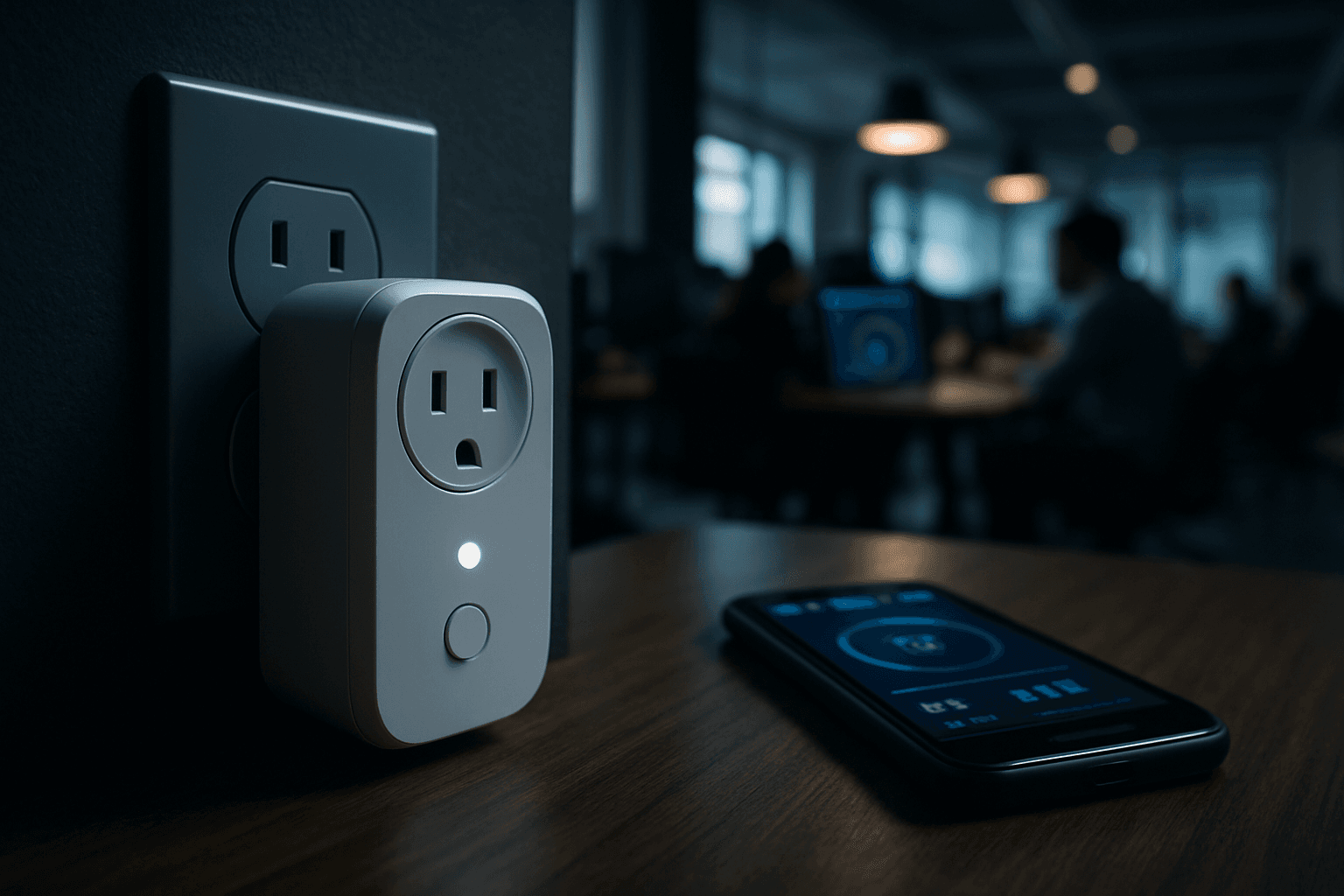
What Energy Monitoring Actually Means
A smart plug with energy monitoring goes a step further by tracking real-time power usage, energy consumption over time, and in some cases estimated electricity cost. But the devil is in the details.
kWh tracking, not just wattage. Wattage shows you instantaneous power draw—how hard a device is working right now. Kilowatt-hours show you accumulated consumption over time—what your monthly electricity bill is actually reflecting. A plug that only shows watts gives you a snapshot. A plug that tracks kWh gives you the complete picture. When buying, confirm the plug specifically tracks cumulative kWh, not just real-time watts.
Accuracy also matters. These are not billing-grade meters. The good ones land within about 3 to 5% of a dedicated meter, which is plenty to spot a high-draw appliance or compare two devices, but not exact to the penny. For most homes, that accuracy is more than sufficient to identify energy waste and make informed decisions about which appliances to replace or when to use them.
Best Overall: Kasa KP125M (Matter-Certified)
The Kasa KP125M is the most consistently recommended energy monitoring smart plug across independent testing in 2026—and after six months of real-world use, it earns that recommendation for reasons that hold up over time.
Here's what makes it stand out:
- The energy monitoring is accurate to within 3% of a reference Kill-A-Watt meter across high and low load scenarios.
- The Kasa app shows real-time wattage, daily and weekly kWh graphs, monthly totals, and projected cost based on your entered electricity rate—exactly the data hierarchy you need for meaningful bill management.
- Matter-compatible—works across multiple smart home platforms.
- Compact design—fits in tight spaces without blocking adjacent outlets. This is important: bulky plugs can render a second outlet unusable, defeating the purpose of having a power strip. The Kasa EP25 packs two independently controlled outlets into a form factor that covers a single wall plate. Each outlet tracks real-time wattage, voltage, and amperage separately, which means you can see exactly how much power your TV draws versus the soundbar plugged in below it.
- The Kasa KP125M works with Alexa, Google Assistant, and Apple Home—across every major ecosystem.
- It is the best sub-$20 smart plug with energy monitoring—accurate wattage, deep usage history, and proven reliability at under $10 per plug when bought in multi-packs.
Best for Apple Homes: Eve Energy (Matter over Thread)
If you're deep in the Apple ecosystem and privacy is a priority, the Eve Energy Smart Plug, at a high $40 price, prevents it from being the best option for everyone, but it still is the one that reviewers turn to whenever they need to make something smart.
- Privacy-focused design: operates with local communication, no Eve cloud, registration, tracking, or cloud dependency. Unlike many smart home devices that route data through cloud servers, the Eve Energy keeps your energy data local.
- Experts highlight that it is the only plug with native Matter 1.3 energy clusters, with energy data surfacing in any Matter platform, not just the Eve app.
- If you want a plug that actually tells you how much electricity a device burns, the Eve Energy smart plug is one of the few consumer options that measures watts, volts, and amps at the outlet instead of guessing.
- At roughly $40 for a single unit, it sits above the $15 no-name plugs you see on Amazon, but the extra money buys genuine metering, Thread radio hardware, and native Matter support.
Best Budget Option: Emporia Smart Plug
At $6.50–$8.75 each when bought in a four-pack, this could be the lowest-priced Wi-Fi outlet with energy monitoring features on the market.
- Emporia Smart Plugs track per-device energy costs, enable remote control, and integrate with Google Home and Amazon Alexa.
- No hub required.
- The Emporia AI Energy Assistant analyzes your plug data to deliver instant, personalized insights. Ask questions the way you'd text a friend and get clear answers about device costs, usage patterns, and savings opportunity.
- The trade-off: Alexa and Google Assistant are both supported, but not IFTTT or Matter. Energy data lives primarily in the Emporia app, though you can control the plug via Alexa or Google.
- For users who just want affordable, per-device monitoring without ecosystem integration, this plug delivers solid value.
Best for Value and Accuracy: Tapo P125M (Under $20)
The TP-Link Tapo P125M is the smartest long-term buy in the under-$20 shortlist because Matter certification adds ecosystem reach without pushing the price past $13. It delivers the same monitoring accuracy as Kasa—third-party tests put Tapo's reporting in the same tier. Mini form factor does not block the second outlet, which matters for audit use.
For households monitoring multiple appliances on a budget, buying Tapo plugs in multi-packs offers exceptional value without sacrificing accuracy or future compatibility.
Wemo Insight: Classic Option with Real-Time Reporting
The Insight Smart Plug allows you to control your lights and appliances and set worry-free schedules from a phone or tablet—with no hub or subscription required. It also provides real-time energy reports to show how much energy your devices are consuming, so you can easily track how much your lights and appliances are costing you.
- The Wemo Smart Plug is rated at 15 amps/1800 watts. This means it can handle most household electronics and small appliances like lamps, fans, coffee makers, etc.
- The Wemo Smart Plug is compatible with Amazon Alexa, Google Assistant, Apple HomeKit, and IFTTT.
- It's a reliable, mature option if you're already in the Wemo ecosystem, though newer plugs offer better accuracy and more detailed data visualization.
What to Look for When Buying
Verify accurate kWh tracking. Some plugs only show watts or volts—not cumulative usage. Verify unit labels in spec sheets.
Check power ratings. Most are rated 15 amps, good for lamps and small appliances. Avoid using with space heaters or heavy tools unless rated for it.
Confirm ecosystem compatibility. Make sure it works with your voice assistant (Alexa, Google, Apple). If ecosystem compatibility matters long-term, prioritize plugs with Matter support for future flexibility.
Examine the app. The interface is genuinely clear, which matters more than it sounds. You shouldn't need to dig through settings to find your monthly kWh total.
Look for certification. Every pick carries genuine UL or ETL certification. None are cheap no-name plugs with fake safety marks.
The Real-World Impact
Energy monitoring plugs aren't just for data enthusiasts. One r/homeassistant user reported cutting their power bill by $23/month after discovering their old chest freezer was drawing 180W continuously instead of cycling on and off like it should. The freezer was dying, and the smart plug caught it.
By identifying which devices are energy vampires and automating their schedules, smart plugs save energy by eliminating vampire power and scheduling devices to run during off-peak hours. Testing showed that scheduling a dehumidifier and cutting standby power from entertainment centers reduced monthly consumption by 8 to 12 percent.
Final Takeaway
For most households, the Kasa KP125M is the smart plug that monitors power usage without any fuss. It is Matter-certified, reliable, and cheap, which is a hard combination to beat. If you need the finest accuracy and privacy-first design and use Apple Home, the Eve Energy justifies its premium price. For budget-conscious multi-device monitoring, the Emporia or Tapo lines deliver measurable results at a fraction of the cost.
Start with one plug on a high-draw device—a refrigerator, space heater, or entertainment center. Once you see the data, you'll understand exactly where your electricity is going—and where you can actually save.