
Best Smart Speaker for Smart Home: Echo vs Google Home vs HomePod
Audio Quality and Hardware
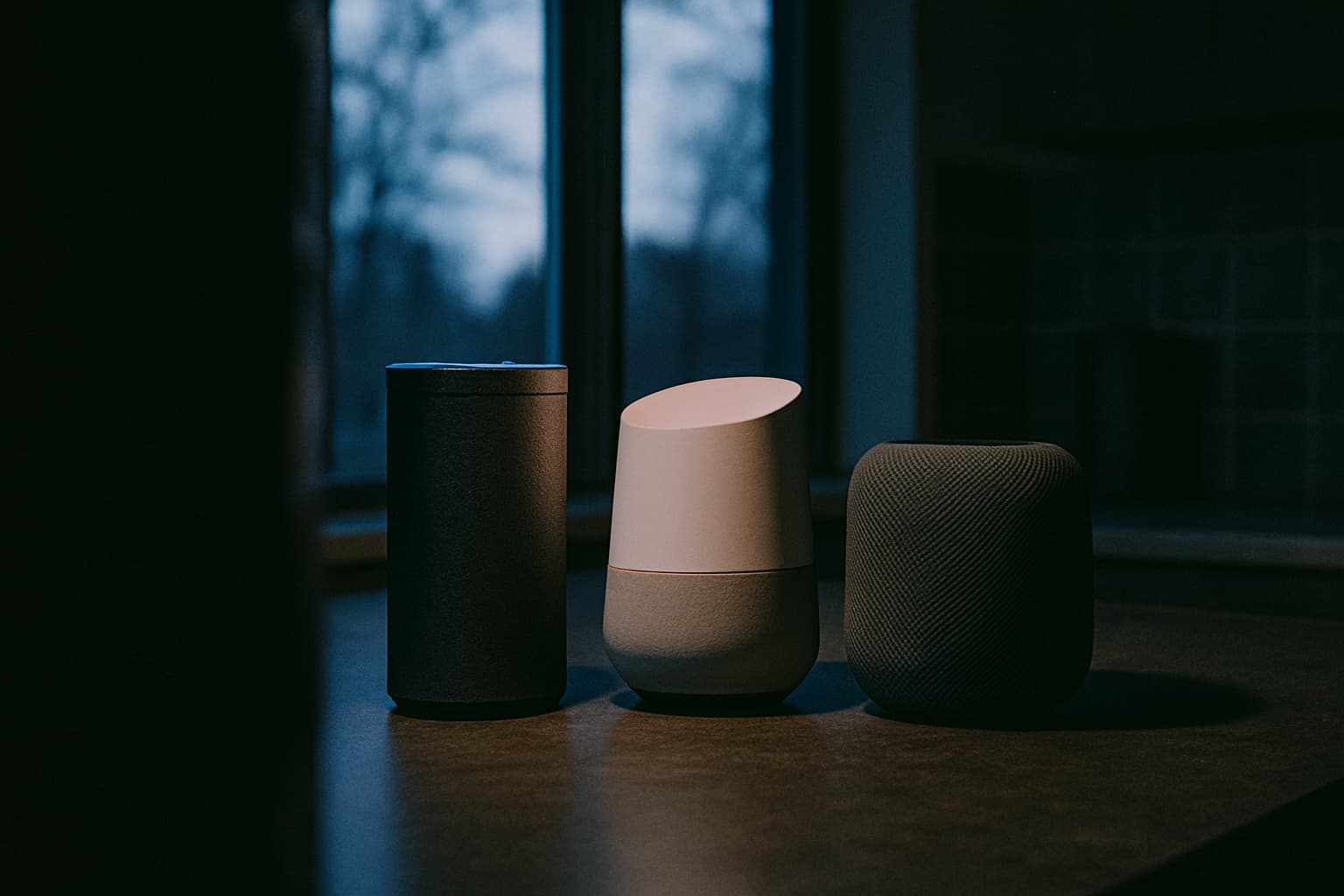
The HomePod (2nd generation) features a 4-inch high-excursion woofer and an array of five horn-loaded tweeters, each tweeter with its own neodymium magnet. It uses spatial awareness, room sensing and computational audio to adjust the music in real time for the environment it is in, making it the premium choice for music enthusiasts.
Google Home has omni-directional sound with a 58 mm full-range driver. The new Google Home Speaker is designed for Gemini and offers 360° audio and surround sound pairing, making it competitive for audio performance while maintaining affordability.
Amazon's standard Echo offers solid mid-range audio. Amazon's 4th-gen Echo has a built-in smart home hub, a temperature sensor, upgraded speakers, and a sleek new design, though it prioritizes functionality over premium sound quality.
Smart Home Compatibility and Matter Support
Smart home integration is where these platforms truly diverge. The latest Echo devices feature built-in smart home hubs that include Matter, Thread, and Zigbee, allowing the devices to directly control thousands of compatible smart home products from a wide range of manufacturers without requiring additional gateways. Amazon's "Works with Alexa" program supports over 85,000 devices as of 2024.
Google Home works with Matter, the universal smart home standard that helps devices from different brands work together. Google Home works with thousands of smart home devices from your favorite brands, including Works with Google Home and Matter-enabled products. However, you do need a Matter controller in your home (a Nest Hub 2nd gen, Nest Hub Max, or Nest Wifi Pro) to use Matter devices with Google Home.
Apple HomeKit traditionally meant everyone in the home needed an Apple device. Matter changes this – Apple's Home app (iOS 16.2 and later) now supports the Matter standard, allowing many new devices to connect. Apple has always had a strong focus on privacy, and it uses end-to-end encryption for communication between Apple devices and HomeKit-compatible accessories, prioritizing local control so that communication rarely leaves your home.
Voice Assistants: Alexa, Google Assistant, and Siri
The three voice assistants bring different strengths to daily use. Alexa excels at automation and device control, Siri prioritizes communication and privacy within Apple's ecosystem, and Google Assistant leads in information accuracy and context handling.
Alexa's vast skills library and third-party device compatibility make it a versatile choice. Alexa responds quickly to smart home commands and excels at automation.
Google Assistant is a leading virtual assistant, offering superior natural language processing and understanding context in conversational commands. Strengths include seamless integration with Gmail, Calendar, Maps, and YouTube, and the ability to continue conversation without repeating "Hey Google" for follow-up questions.
Siri offers voice commands, personalized suggestions, and deep integration with Apple's ecosystem. It can set reminders, send messages, make calls, and even interact with third-party apps. However, Siri works best only with Apple devices. It is not ideal for Android or Windows users, and there are fewer compatible smart gadgets compared to Alexa and Google.
Pricing and Value
Pricing varies significantly across the three platforms:
- Amazon Echo Dot: Starting at $49.99 – the most affordable entry point
- Google Home Speaker: $99.99 – competitive pricing with solid features
- Apple HomePod Mini: $99 / £99 / AU$149
- Apple HomePod 2nd Generation: $299.99 – premium option for audio quality and Apple ecosystem integration
Who Should Choose What
Choose Amazon Echo if you want the widest third-party device compatibility and the most affordable entry point into smart home automation. Alexa's automation capabilities and the sheer number of compatible devices make it ideal for building a comprehensive smart home from scratch.
Choose Google Home if you rely heavily on Google services like Gmail, Calendar, and Maps, or if you value superior natural language processing and answering general knowledge questions. Google Gemini integration delivers genuinely helpful reasoning, better multi-user voice recognition, and hands-free control.
Choose Apple HomePod if you own multiple Apple devices, prioritize privacy and audio quality, and want seamless integration with HomeKit. Sound quality is Apple's main focus with the larger HomePod, though it also serves as a home hub for HomeKit and Matter.
The Bottom Line
For the best smart speaker for smart home automation, your choice depends on which ecosystem you already inhabit. Matter is a communication standard for smart home devices that is intended to increase compatibility, allowing you to use smart home products from different manufacturers with different smart home systems such as Apple HomeKit, Google Assistant, and Alexa. As long as they work with Matter, they'll work with each other. This emerging standard is gradually reducing lock-in, but your voice assistant choice still matters. Amazon offers the most options at the lowest prices, Google excels at information and search, and Apple delivers on audio and privacy. Start with the ecosystem that already fits your devices, then expand outward.