
Dolby Atmos vs DTS:X: Which Immersive Audio Format Wins?
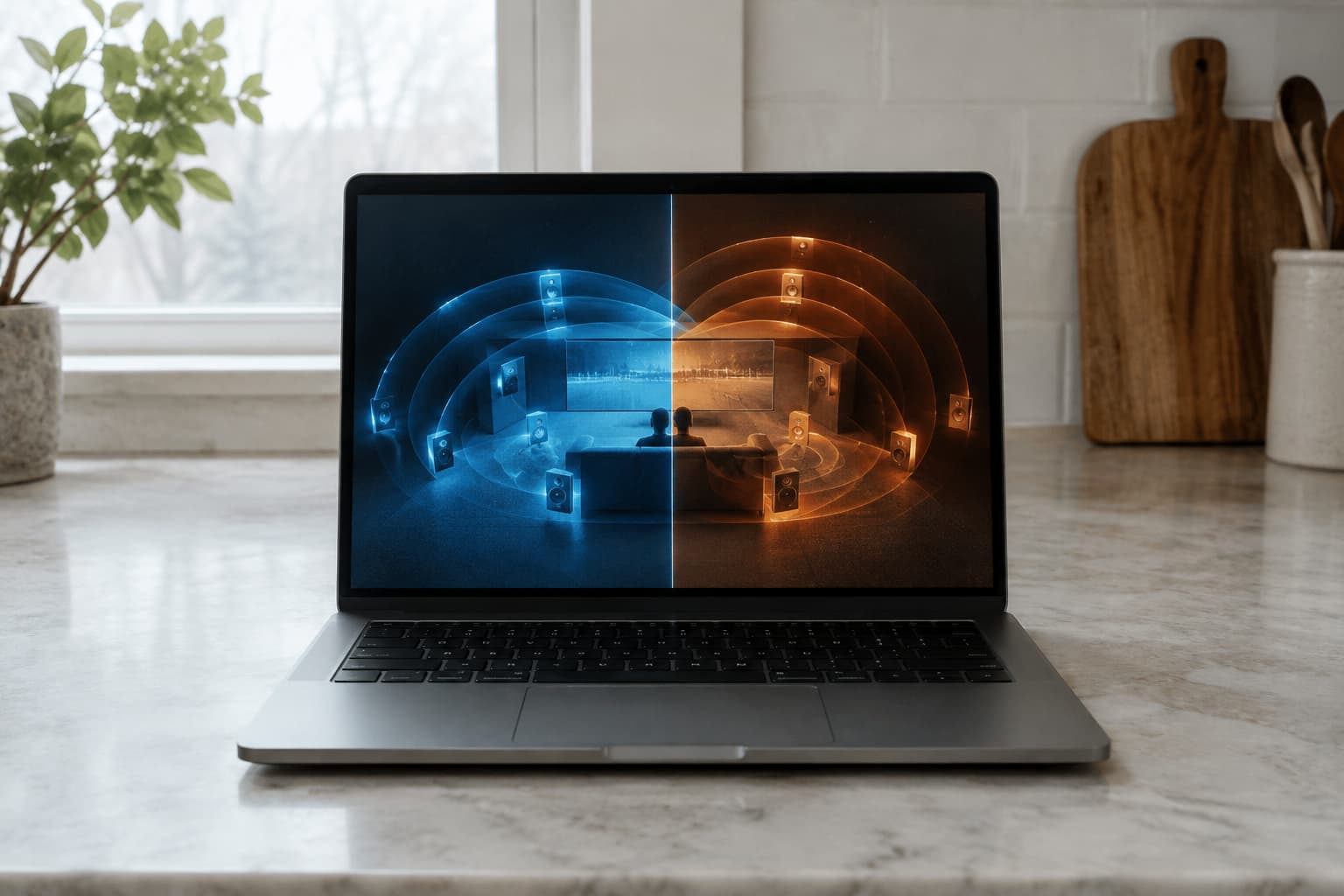
How They Work: The Object-Based Difference
Dolby Atmos is an immersive audio format that surrounds the listener with sound, introducing height channels to enable sound from above to increase aural envelopment. Based on objects and channels, this format places sound around a three-dimensional space by using 64 speakers to reproduce 10 'bed' channels and 128 different objects.
DTS:X is an immersive audio format developed by DTS that uses object-based mixing to position sound elements in 3D space, allowing sound designers to place individual audio elements in a 3D sound field, including height, independent of specific speaker layouts.
Both formats use object-based audio rather than traditional channel-based systems, but the similarity ends there. Dolby prioritizes precision and standardization, while DTS emphasizes adaptability and user control.
Speaker Flexibility: The Critical Difference
This is where the formats diverge most significantly.
Dolby Atmos demands dedicated infrastructure. Dolby Atmos requires a fully compatible audio chain to deliver its immersive 3D sound experience, with every component—from the content source to the playback device—must support it. The minimum speaker requirement for Atmos is two height or overhead speakers, and for the best 3D effect, Dolby recommends installing at least four height speakers.
Unlike Dolby Atmos, which requires specific height and surround placements, DTS:X can work with arbitrary speaker layouts. DTS:X supports a scalable number of speakers and does not require height speakers to function, though it can utilize them for greater immersion. If height speakers are missing, DTS:X can use HRTF (Head-Related Transfer Function) filters to simulate overhead effects via ear-level speakers, which is generally more flexible than Dolby Atmos' Virtual Height Processing.
For those with unusual room layouts or existing speaker setups, DTS:X may be a more practical choice due to its flexibility.
Audio Object Capacity
Dolby Atmos supports up to 128 simultaneous audio objects, providing exceptional precision and depth in complex sound scenes. DTS:X supports up to 32 audio objects. This four-to-one advantage for Dolby Atmos means more granular control during mixing, though for most viewers, both deliver highly immersive experiences.
Sound Quality in Real-World Use
The theoretical specs matter less than actual listening experience. In audio tests, few if any listeners have been able to reliably ascertain the difference between the two codecs. In reality, the difference in sound quality is likely minimal.
Both use an object-based approach and the audible differences in a well set up system are subtle enough that most listeners cannot reliably tell them apart blind. However, Dolby Atmos often provides slightly more refined overhead effects because many movie studios specifically optimize their soundtracks for Atmos, while DTS:X excels at adapting to different room layouts and can produce impressive immersion without requiring dedicated ceiling speakers.
Content Availability: Dolby Atmos Dominates
This is where Dolby Atmos pulls decisively ahead.
Dolby Atmos has broader compatibility, with users able to get compatible audio from Netflix, Amazon Prime Video, iTunes, Vudu, and most Blu-Ray releases. Netflix has the largest Dolby Atmos catalog of any streaming service, available on the Premium plan at $26.99 per month. Disney+ has become one of the most compelling Atmos destinations for franchise content, with Dolby Atmos available on the No Ads plan at $18.99 per month.
The most common services with Dolby Atmos support include Netflix, Disney+, Max, Apple TV+, Prime Video, Paramount+, and selected titles on Hulu and YouTube.
DTS:X tells a different story. DTS:X is only offered on specified releases. Unlike Atmos, DTS:X is not currently supported by any major streaming service. DTS:X is widely supported in home theater systems and is available on select Blu-ray discs, though it's slightly less prevalent on streaming services.
For streamers, this is the dealbreaker. No major streaming service currently delivers DTS:X to a home system, which makes Atmos the default format for any household that watches mostly through apps.
Hardware Support
Both formats have broad receiver support, but approaches differ. Most major AV receiver brands offer DTS:X support, with brands including Denon, Marantz, Onkyo, Integra, Pioneer, Yamaha, and others offering a wide variety of models with DTS:X support. Many modern AV receivers support both formats.
Soundbars tell another story. Dolby Atmos has a clear advantage in the soundbar market, with many models offering Atmos support through upward-firing drivers, while DTS:X support in soundbars is less common.
Setup Complexity
For Dolby Atmos, you'll need either ceiling-mounted speakers or upward-firing Atmos speakers for height effects, with ceiling speakers providing the most accurate overhead sound but requiring installation, while upward-firing speakers sit on top of your regular front or rear speakers and bounce sound off the ceiling.
DTS:X's flexibility here is genuine. DTS:X adapts to the speaker layout of any room, ensuring optimal performance whether you have a basic setup or a complex array of speakers.
Which Format Should You Choose?
Neither format is universally better—Dolby Atmos offers broader streaming support and wider hardware compatibility, while DTS:X provides greater flexibility for speaker placement, and the right choice depends on your room, equipment, and viewing habits.
Choose Dolby Atmos if:
- You stream frequently via Netflix, Disney+, or other major services
- You prefer standardized speaker configurations
- Soundbar compatibility matters to you
- You want maximum object precision for complex mixing
Choose DTS:X if:
- You primarily watch 4K Blu-rays with uncommon speaker layouts
- Your room has unusual dimensions or non-standard placement options
- You want flexible speaker adaptation without strict requirements
- Manual audio element control appeals to you
For most home theater enthusiasts, the practical difference between Dolby Atmos and DTS:X is availability, not sound quality: Atmos reaches nearly every streaming service and soundbar, while DTS:X is largely confined to physical discs and AV receivers. If streaming is your primary use case, Dolby Atmos is the clear winner. If you're a physical media collector with a non-standard setup, DTS:X's flexibility might justify the investment.