
First Party vs Third Party Cookies Explained: Key Differences
What Are First-Party Cookies?
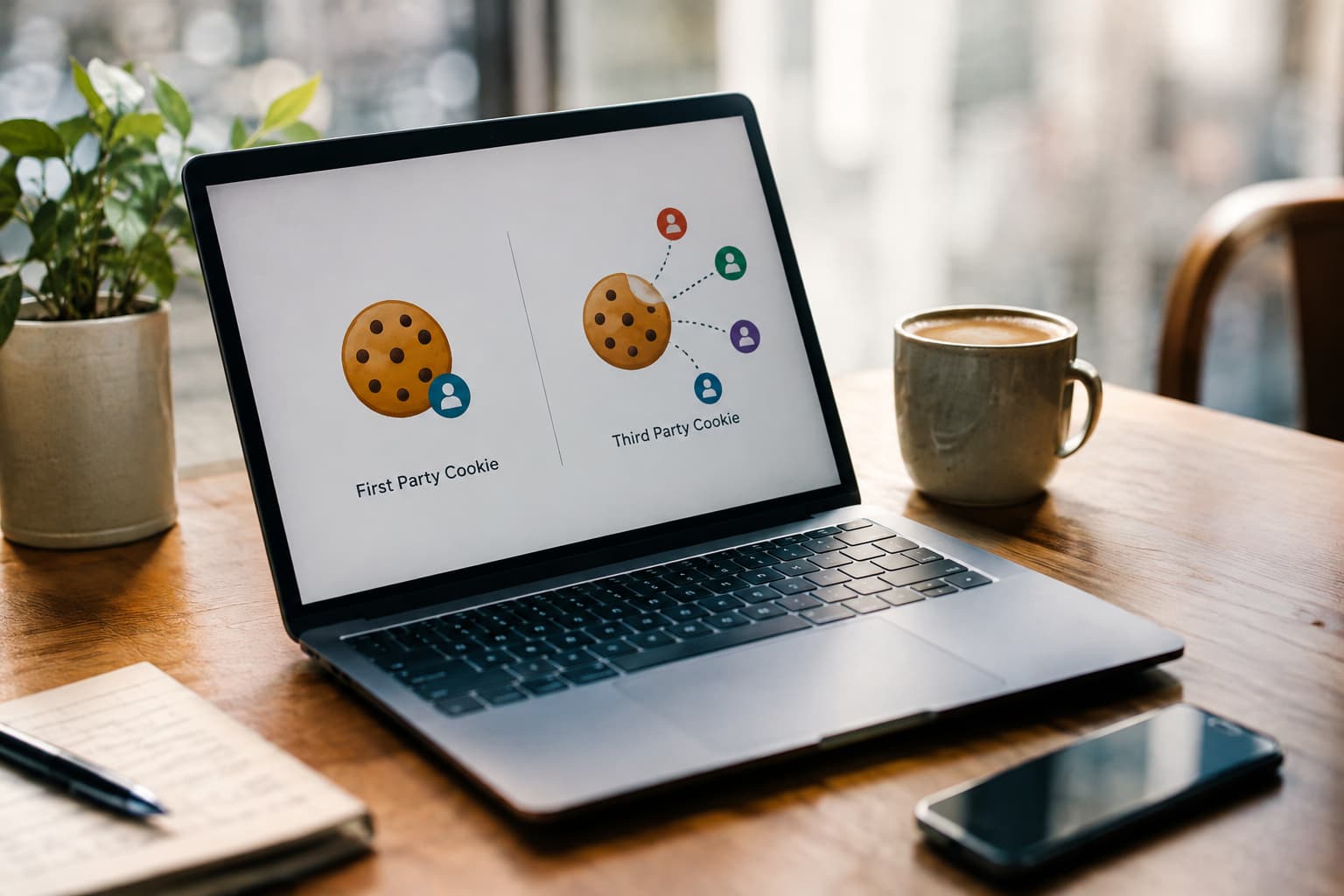
First-party cookies are created and stored directly by the website you visit. Only the website publisher has access to these cookies. When you land on a site, that site's own servers generate these cookies and store them on your browser.
First-party cookies remember your preferences, such as language settings, font size, and items in your shopping cart, enabling improved navigation and customization. Additionally, first-party cookies contribute to website analytics, allowing website owners to understand user behavior, improve their services, and deliver relevant content.
The majority of web browsers automatically accept first-party cookies. This is because first-party cookies serve functions users directly benefit from—logging in, remembering preferences, and maintaining shopping carts.
What Are Third-Party Cookies?
Third-party cookies, also known as cross-site cookies, are cookies set by a website other than the one you are currently on. When you visit a website that contains third-party content, such as embedded videos or social media plugins, these third-party cookies are created and stored by the respective third-party domains.
When you visit another website using the same third-party service, your browser may send that cookie back to the third party. This allows the service to recognize the same browser across different sites and build a picture of browsing behavior over time. This capability is what makes third-party cookies valuable—and controversial.
The Core Differences
The distinction between first-party and third-party cookies centers on origin and scope. First-party cookies are created by the website you are directly interacting with, while third-party cookies are created by external domains. First-party cookies are typically used for essential website functions and personalized experiences, while third-party cookies are commonly used for advertising and tracking purposes.
First-party cookies are available to the domain that created them, while third-party cookies are accessible on any website that loads the third-party's server code. This scope difference is what enables third-party cookies to build cross-site profiles of users.
How Third-Party Tracking Works
Third-party cookies track user activity and display advertisements based on that activity. The mechanics are straightforward but powerful. If you ever searched for a shirt on a clothing site and the same shirt appeared in display ads on other websites, it is because advertising services are using third-party data to retarget you through programmatic advertising based on your prior online activity.
People may worry about privacy because third-party cookies track users' browsing history and behavior across multiple websites without direct approval. Third-party cookies pose privacy concerns as they track your browsing habits across multiple sites, building a detailed profile of your online activities.
Privacy Implications and Browser Response
Third-party cookies can raise concerns, while first-party cookies generally have minimal impact on user privacy as they are limited to the website you are visiting. This distinction has prompted major browser makers to act.
Apple's Safari and Mozilla's Firefox have already blocked third-party cookies by default. Safari has blocked third-party cookies by default since 2017 through Intelligent Tracking Prevention.
Google Chrome's approach has been more complicated. Chrome tested restrictions for a subset of users in early 2024, but Google changed direction in July 2024 and said it would not deprecate third-party cookies as previously planned. Chrome is keeping third-party cookies for the foreseeable future (though use is optional).
Consent Requirements Under Regulation
Regulatory frameworks differ significantly in how they handle cookies. Understanding your obligations depends on where your users are located and which laws apply.
GDPR Requirements
According to the GDPR, cookies qualify as personal data, since they are used to identify users. The EU's General Data Protection Regulation takes a strict approach.
Obtain user consent before using any cookies except for strictly necessary ones. Strictly necessary first-party cookies (for example, session cookies for login or shopping cart functionality) do not require consent under GDPR because they are essential for the website's operation.
Both CCPA and GDPR emphasize the importance of obtaining user consent before collecting and processing their personal data through cookies. Cookie consent management acts as a means to gather this consent.
CCPA and CPRA Requirements
The California Consumer Privacy Act takes a fundamentally different approach. Whereas the GDPR is an opt-in regime (no non-essential cookies can be placed until a user actively consents), the CCPA is an opt-out regime.
The CCPA and CPRA do not require opt-in consent before you set ordinary website cookies. Instead, the California Consumer Privacy Act doesn't require explicit opt-in consent for cookies. However, it does mandate transparency and user control over personal data collection.
Managing Cookies on Your Site
Whether you rely on first-party or third-party cookies, transparency is essential. These regulations place specific requirements on organizations regarding the use of cookies, including obtaining consent prior to legally collecting personal information from a website visitor and disclosing the purpose and categories of information that you would like to collect.
First-party cookies—set by the website you are visiting—remain fully supported by all major browsers and are considered a privacy-respecting way to collect user data. If you're currently relying on third-party tracking, first-party alternatives are increasingly viable and offer better regulatory protection.
The shift is clear: The industry shift is focused on phasing out third-party cookies, which track users across different websites. Websites that build out first-party data collection and invest in privacy-conscious tracking methods position themselves better for the future than those clinging to third-party cookie infrastructure.