
Intel Core i9 vs AMD Ryzen 9 Gaming: CPU Performance Compared
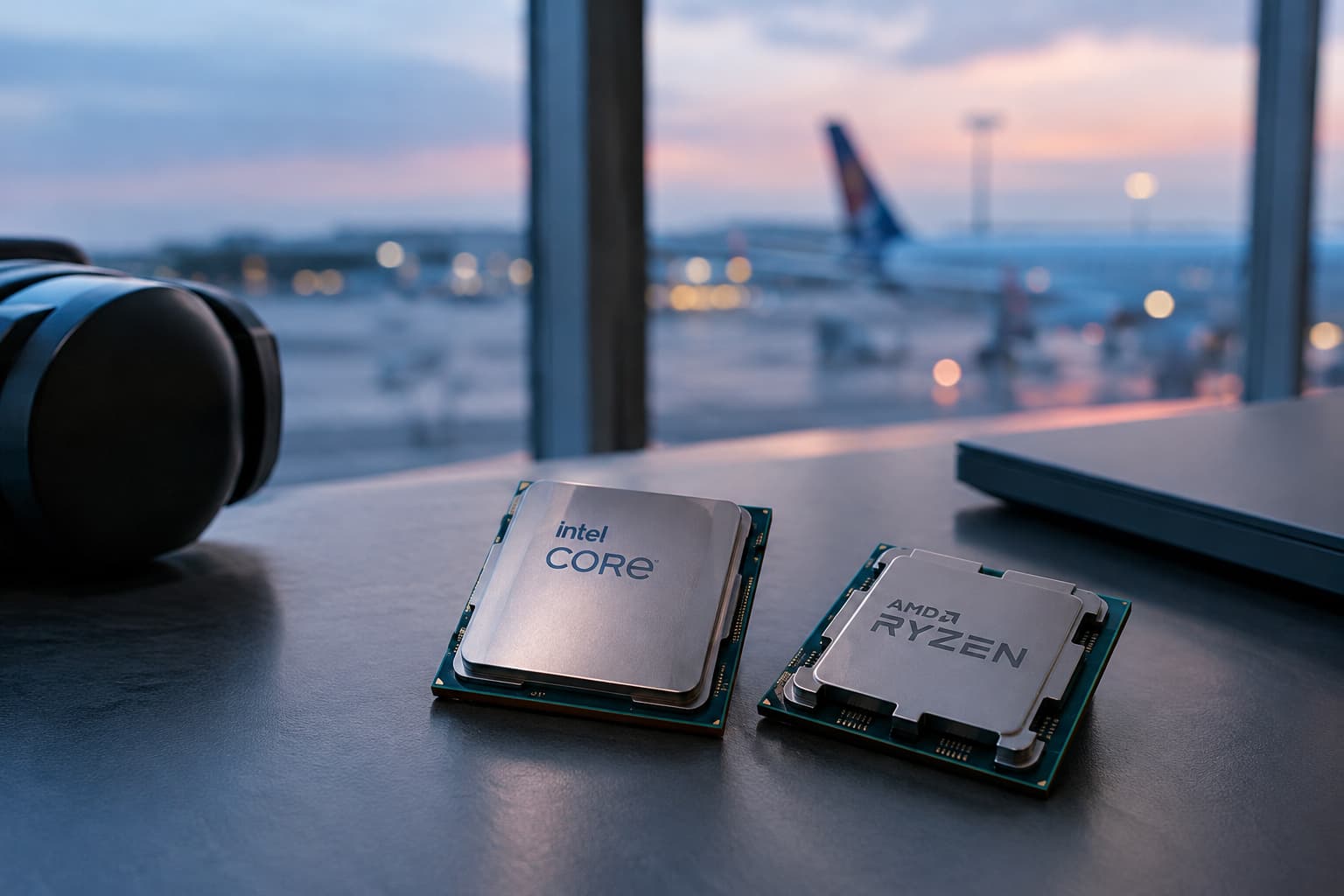
Architecture and Design Philosophy
Intel uses a hybrid layout of performance and efficiency cores. The Core i9-14900K features 24 total cores split between 8 performance cores and 16 efficiency cores, with 32 threads total. It has a maximum turbo frequency of 6 GHz and 36 MB of L3 cache.
AMD's approach differs significantly. The Ryzen 9 9950X3D incorporates 16 cores and 32 threads, with a base clock frequency of approximately 4.3 GHz and boost speeds reaching up to 5.7 GHz. The processor targets both gaming and content creation workloads and features AMD's second-generation 3D V-Cache technology. This cache design is the key differentiator for gaming performance.
Gaming Performance: Where Intel and AMD Differ
For pure gaming frame rates, the picture has shifted in AMD's favor—but the gap depends on which generation you're comparing.
The Core i9-14900K outpaces the AMD Ryzen 9 9950X by a significant 10% in 1080p gaming performance, with an average FPS of 181 in a geometric mean. At 1440p resolution, the Core i9-14900K achieves an average FPS of 161, while the Ryzen 9 9950X manages 150 FPS, representing a 7.3% performance advantage for the Intel processor.
However, AMD's 3D V-Cache models tell a different story. The Ryzen 9 9900X3D achieves a 17.7% lead in average FPS in a 16-game geometric mean and a 12.6% improvement in 1% lows over the Core i9-14900K. The Ryzen 9 9900X3D offers approximately 18% higher average FPS and approximately 13% smoother 1% lows than the Core i9-14900K, while delivering 36% better efficiency during gaming.
Real-world game performance varies by title. In titles like Cyberpunk 2077 and Alan Wake 2, Intel edges ahead by 5–8% at 1080p with high-refresh setups. In esports titles like CS2 and Valorant, Intel consistently delivers over 400 FPS at 1080p. Meanwhile, the Ryzen 9 7950X3D dominates in games optimized for large L3 caches—like F1 2024, Total War: Pharaoh, and Starfield—where cache-sensitive mechanics result in up to 25% higher average frame rates compared to non-X3D counterparts.
Single-Thread vs. Multi-Thread Performance
At 1080p in some esports titles, an Intel Core i9 can lead slightly in frame-rate charts, while at 1440p or 4K the difference often shrinks as the GPU becomes the main limit. This is because Intel's higher clock speeds benefit single-threaded gaming workloads, particularly at lower resolutions where the CPU matters most.
For productivity tasks and multi-threaded workloads, the story changes. AMD's higher core count and strong all-core performance make Ryzen 9 processors excellent for content creation, streaming, and rendering work alongside gaming.
Power Consumption and Thermal Characteristics
The Core i9-14900K has a base power of 125W and maximum turbo power of 253W. Intel's 14900K draws more power and runs hotter under load.
The Ryzen 9 9950X3D has a default thermal design power (TDP) of 170 W, with a maximum consumption of 230 W. AMD's design tends to run cooler and more efficiently, particularly in sustained workloads.
Pricing and Value
Pricing remains a crucial factor. The Core i9-14900K carries a recommended customer price of $589.00-$599.00. However, market prices have dropped significantly—Amazon US offers the Core i9-14900K for just $388, down 10% from its typical modern price but far from its launch MSRP of $589.
For AMD's gaming-focused options, the Ryzen 9 9900X3D carries an MSRP of $599, with the Ryzen 9 9950X3D available for $699. The non-X3D Ryzen 9 9950X launched at $649. The Ryzen 9 9950X has 16 cores and 32 threads and uses 80MB of combined L2/L3 cache with a TDP of 170W.
For pure gaming value, an AMD Ryzen 9 with 3D V-Cache (the 9950X3D) is the faster chip for pure gaming frame rates: its stacked cache is exactly what games love. An Intel flagship (the i9 14900K) is level for mixed work like editing and rendering, and slightly behind for gaming.
Which Should You Choose?
Choose Intel Core i9 if: You want strong performance across gaming and productivity, value high single-threaded performance, or find competitive pricing after recent market adjustments. The i9-14900K remains an excellent all-rounder.
Choose AMD Ryzen 9 (especially X3D models) if: Gaming performance is your top priority, you want the highest frame rates in cache-sensitive titles, or you plan to stream or render content alongside gaming. The efficiency gains matter if you're running your system 24/7.
Both processors deliver outstanding gaming performance at high-end resolutions like 1440p and 4K, where GPU limitations matter more than CPU differences. The gap between them continues to narrow with each generation, making either choice viable for the next several years of high-performance gaming.