
Smart Door Window Sensor: Buyers Guide & Top Picks 2024
How Smart Door and Window Sensors Work
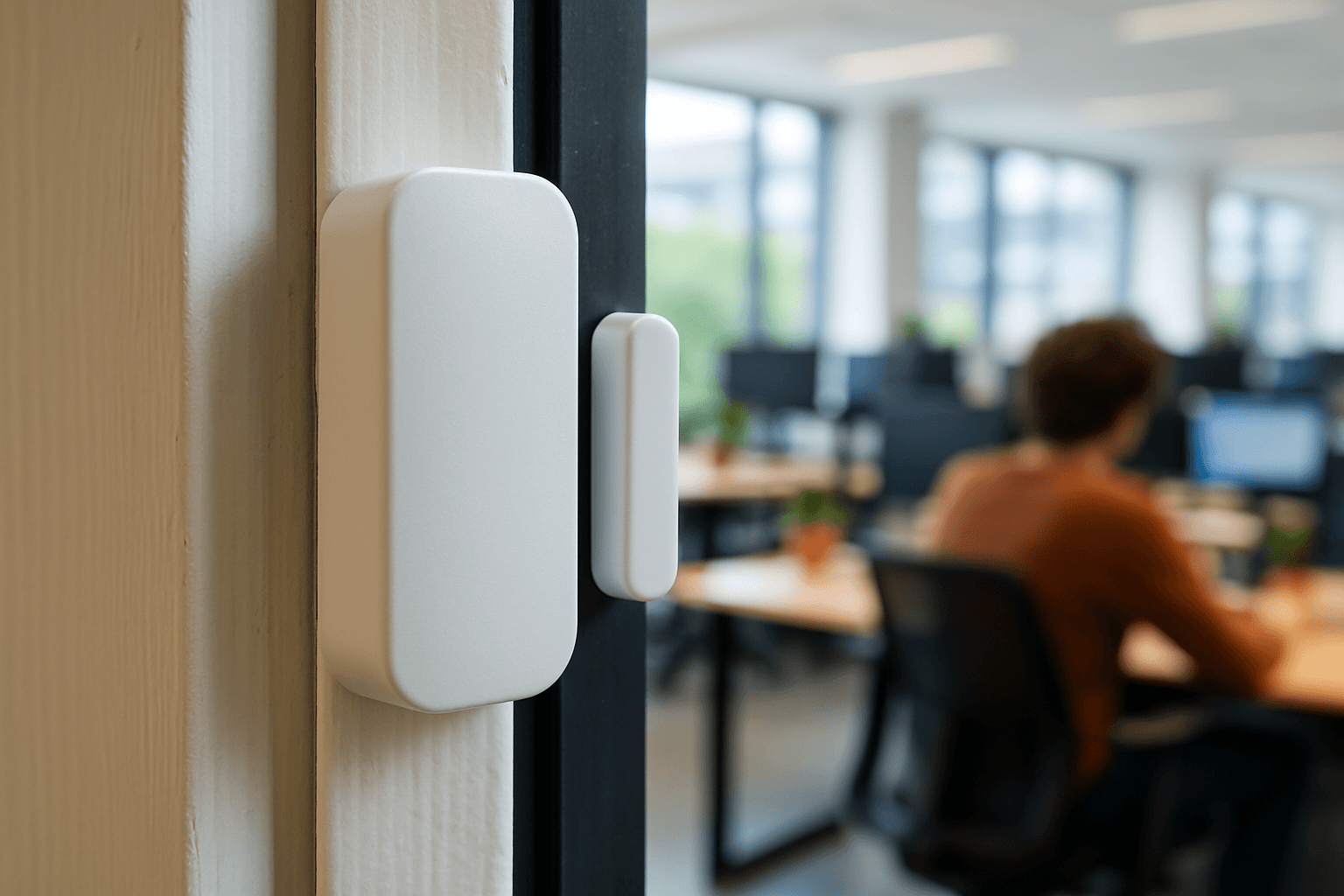
Smart door sensors typically consist of two parts: a magnet and a sensor, which are installed on the door and its frame. When the door is opened or closed, the change in the magnetic field is detected by the sensor, which then sends a signal to a connected smart home system or smartphone app, notifying the user of the door's status.
The sensor detects when the magnet moves away, indicating the door or window has been opened or closed. Installation is straightforward: mount the sensor on the frame and the magnet on the door or window itself, and they form a magnetic contact that breaks when the entry point opens.
Some advanced sensors may also include additional features like motion detection, temperature monitoring, or integration with other smart devices for enhanced security and automation.
Connectivity Protocols: Choosing Your Network
When evaluating smart door window sensors, you'll encounter three main connectivity standards, each with distinct advantages and trade-offs.
Zigbee: Budget-Friendly and Abundant
Zigbee devices are low-cost, energy-efficient, and offer a longer range by utilizing a Zigbee router to forward messages. You can procure smaller devices, like various sensors and buttons, that typically carry a button-cell battery meant to last seven years. If you want to fill a room with door, motion, temperature and contact sensors for $10 each, Zigbee is how you do it.
The tradeoff: Zigbee runs on the crowded 2.4 GHz band right next to your Wi-Fi, and vendors regularly stretch the standard with proprietary extensions.
Z-Wave: Reliable and Secure
Z-Wave devices are more secure than Zigbee since they offer an additional security layer to protect against DDoS attacks, besides following AES-128 encryption for data transmission. A typical Z-Wave device can reach 30–100 meters in open air. Z-Wave has strong coverage in security-oriented smart home categories: door locks, motion sensors, door/window sensors, and alarm systems. Brands like Schlage, Yale, Aeotec, Zooz, and Fibaro have extensive Z-Wave portfolios.
Matter over Thread: The Future Standard
Matter is younger and structurally different from the other two. Where Zigbee and Z-Wave are full radio protocols, Matter is an application layer: the standard for what data devices send, not how they send it. The Aqara Door and Window Sensor P2 is one of the first sensors on the market designed to work with the Matter connectivity standard and use the IPv6-based wireless Thread Protocol that reduces the power needed to run the sensor.
Thread sensors offer months of battery life and near-instant response times (sub-second).
Top Smart Door and Window Sensor Options
Best Overall Value: YoLink Smart Home Starter Kit
The YoLink Smart Home Starter Kit uses a hub that connects to your internet router for mobile app controls and comes with four long-range sensors, and it's surprisingly affordable to add more. The smart home hub works with Amazon Alexa, Google Assistant, and IFTTT, so you can ask for the status of your sensors anytime or program smart devices like smart lights to react when a door opens.
Best for Apple HomeKit: Eve Door & Window Sensor (Matter)
Eve's sensor connects to Matter over Thread, which enables speedy status updates while keeping your home's activities local, with extended battery life lasting up to a year on the included 3.6V ER 14250 battery. The Eve Door & Window sensor does not rely on cloud servers, ensuring that all data remains local and encrypted within the Apple ecosystem.
Best Budget Pick: Aqara Door and Window Sensor
The Aqara Door and Window Sensor stands out as the clear choice for most smart home setups, with its compact 36mm design disappearing on door frames, while the CR1632 battery delivers 18-24 months of reliable operation and response times consistently hit 200-300 milliseconds, with a $12 price point making multi-door coverage affordable.
It's compatible with all the major platforms, including Amazon Alexa, Google Assistant, Google Home, Apple Home and Siri, Samsung SmartThings and Aqara Home.
Best for Ring Ecosystem: Ring Alarm Contact Sensor (2nd Gen)
Ring Alarm Contact Sensor gets instant mobile alerts when doors and windows open. Now smaller to enable increased placement options with easy installation with no tools required. Uses two CR2032 batteries, which may last up to 3 years depending on usage. Requires the Ring Alarm Base Station.
Best for HomeKit WiFi Setup: Meross Smart Door & Window Sensor Kit
The sensor allows you to set automated routines and notifications to stay on top of potential intrusions or changes in your environment, whether integrated with HomeKit, Alexa, or Google Assistant. The Meross door sensor has up to 18 months battery lifespan. The Meross hub provides reliable & stable transmission in basement and reaches 328 feet transmit distance (open air).
Key Features to Compare
When looking for smart home discounts on these sensors, it is important to understand their form factor, connectivity requirements, integrated sensors, and ecosystem compatibility. Choosing the right contact sensor involves ensuring it fits discreetly within your home's aesthetics and determining if its integrated features can enhance overall security and energy efficiency.
Battery Life: Battery efficiency improved 40% over 2024 models, with many sensors now lasting 3+ years. Budget for regular battery replacements—most sensors use coin-cell batteries that last between 18 months and 3 years depending on usage and protocol.
Installation Method: Modern sensors offer tool-free installation via 3M adhesive strips, ideal for renters. However, permanent screw mounting prevents sensors from shifting due to door vibrations.
Hub Requirements: While Matter door and window sensors are relatively affordable, you'll most likely need more than one to cover all your home's entry points. You'll also need to consider battery replacements and whether a sensor requires an additional vendor-specific hub.
Building Your System: What You Actually Need
If you connect your sensor to a smart home, it can help trigger other devices. You can try different automation routines, like linking closet lights to the closet door, turning off the AC when there's an open window, or triggering a camera when the door opens.
Start with your primary entry points—front door, back door, and ground-floor windows. Standard hinged doors accommodate most sensors with adhesive mounting 6-8 inches from the handle. Sliding glass doors require careful positioning to maintain the 0.5-inch maximum gap tolerance between sensor and magnet components.
Choose sensors that match your existing smart home ecosystem. If you're invested in Apple HomeKit, Eve offers the best Matter integration. If you run Alexa or Google Home, Aqara and Meross provide better cross-platform compatibility. Ring sensors lock into the Ring ecosystem but offer solid performance if that's where your security cameras live.
For most homes, Zigbee, Z-Wave and Thread exist precisely because a door sensor should run for a year on a coin cell. Pick one protocol, buy several sensors to cover your entry points, and avoid the complexity of mixing standards if you're just starting out.