
VPN vs Proxy vs Tor: Which Privacy Tool Fits Your Needs
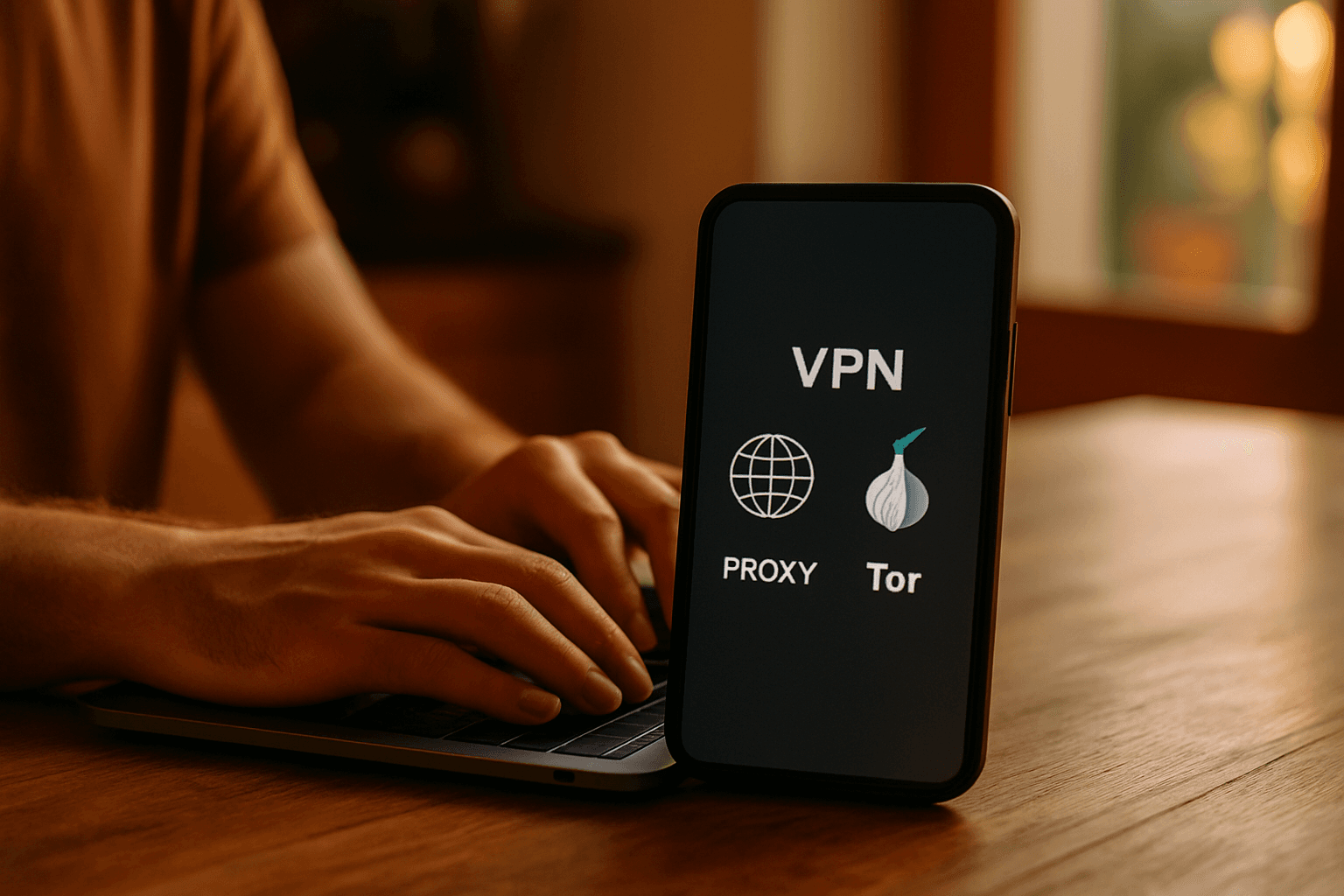
How VPNs Work: Full-Device Encryption
A VPN works based on encryption, which hides the true meaning of information. When you connect to a VPN, encryption typically creates a secure tunnel in which the user's data is encoded.
A VPN sends all your internet traffic through an encrypted tunnel and hides your IP address across every app and website. This is a significant advantage: the protection extends to everything leaving your device, not just web browsing. VPN traffic runs through an encrypted tunnel, making VPNs an effective solution for ensuring network security.
The way a VPN protects you involves several layers. During the handshake, your device and server share a private encryption key. Once the connection is established, the VPN encrypts outgoing data before sending it to the VPN server.
When to use a VPN:
- Online banking and shopping involve sensitive information such as login credentials and payment details, making a secure connection particularly important.
- Remote work company systems often expect a VPN before granting access, and the encrypted tunnel keeps internal traffic away from whatever network you happen to be on.
Understanding Proxies: IP Masking Without Encryption
A proxy functions as an intermediary between your device and the internet. When you send a request to access a website, the request is first directed to the proxy server. The server processes the request, retrieves the desired content, and forwards it back to you. This process effectively masks your real IP address, providing anonymity and enabling access to restricted content.
Here's where proxies differ fundamentally from VPNs: they typically don't encrypt your data. VPNs hide not only your private IP address but all your web activity, such as the websites you visit, using encryption. Proxy servers, on the other hand, will only change your IP address, but they won't encrypt your online activities.
A proxy only changes your IP for the specific app or site you set it up for and does not typically encrypt your data. This limitation makes proxies a questionable choice for serious privacy needs. Unless the website connection uses HTTPS, your data is sent in cleartext. Relying on a proxy for security is like sending a postcard—although the address is changed, the message is open for anyone to read.
When proxies make sense:
- A proxy makes sense when you need traffic to appear from another location for a single app or task, and privacy is not a priority.
Tor Browser: Anonymity Through Multiple Layers
Tor Browser is a privacy-focused web browser that routes your traffic through the Tor network, hiding your real IP address, preventing tracking, and protecting you against surveillance and censorship.
Tor works by sending your traffic through three random servers (also known as relays) in the Tor network. The last relay in the circuit (the exit relay) then sends the traffic out onto the public internet. The multi-layered approach is unique. Tor ensures your privacy by encrypting your internet traffic in multiple layers, much like peeling an onion (hence the name).
When your data is sent through the Tor network, it passes through at least three nodes: a guard node, a middle node, and an exit node. Each relay peels exactly one layer and forwards the packet, so the guard sees your IP but not your destination, the exit sees the destination but not your IP, and the middle sees neither. In a normal Tor circuit, no single relay is intended to learn both your real IP and the final destination.
Key limitation of Tor: Tor only secures what happens inside the Tor Browser—it doesn't protect other apps, downloads, or devices on your network. Additionally, the Tor Browser is free and open-source, maintained by the non-profit Tor Project, and is often used to access both the surface web and the dark web.
VPN vs. Proxy vs. Tor: Head-to-Head Comparison
Encryption Coverage: A VPN provides a full layer of encrypted protection, making it the more reliable option for users who care about privacy, security, and comprehensive online anonymity. Proxies offer no encryption by default, while Tor encrypts data at multiple stages within the Tor network.
Speed: Tor's multi-hop routing across the globe adds significant latency, which can slow down browsing and make activities like streaming or gaming impractical. VPN's single encrypted tunnel offers faster, more stable connections. VPNs are faster than Tor because Tor uses multiple servers and relays to route your connection, whereas VPNs offer a single-hop connection to the server. This means VPNs usually provide a faster internet connection and are more efficient at bypassing ISP throttling.
Anonymity: Tor is generally more effective at anonymizing your activity because no single relay knows both your identity and destination. However, Tor routes your traffic through three volunteer nodes, so no single point knows both who you are and where you are going. VPNs, by contrast, require trusting the VPN provider, though reputable services tend to implement strict no-logs VPN policies and undergo independent audits to verify they do not record or monitor traffic.
Cost: The Tor browser is free, while quality VPNs are paid services. Most proxy servers are free, and to make up for this lack of charge, many will sell user data to advertisers. Most VPNs, on the other hand, are paid and do not log or share user traffic data.
Blockage: Some websites block Tor traffic entirely due to security concerns, and using Tor may raise curiosity or suspicion in certain situations. This is a practical drawback that doesn't affect VPNs in the same way.
Which Tool Should You Choose?
The right choice depends on your priorities:
- Choose Tor if you need maximum anonymity and don't mind slower speeds.
- Choose a VPN if you want speed, full-site access, and strong everyday protection.
- Use a proxy only for simple geo-bypassing or lightweight access needs without strong privacy requirements, though a VPN is still the safer option.
For most people, a good rule of thumb is to use a VPN all the time and use Tor when you need it. A VPN improves privacy without interfering with day-to-day web browsing and internet usage. Launch Tor when anonymity is critical or you want to access the dark web.
If you need everyday privacy and speed, go with a VPN. If you're a journalist, activist, or dissident in a high-risk environment, Tor provides superior anonymity despite its speed trade-offs. VPNs are ideal for privacy, data protection, and secure browsing on public Wi-Fi, while proxies are best for simple geo-bypassing or lightweight access needs. Proxies should generally be avoided for serious privacy needs due to their lack of encryption.