
Smart Garage Door Opener: Complete Guide to Features & Costs
What Is a Smart Garage Door Opener?
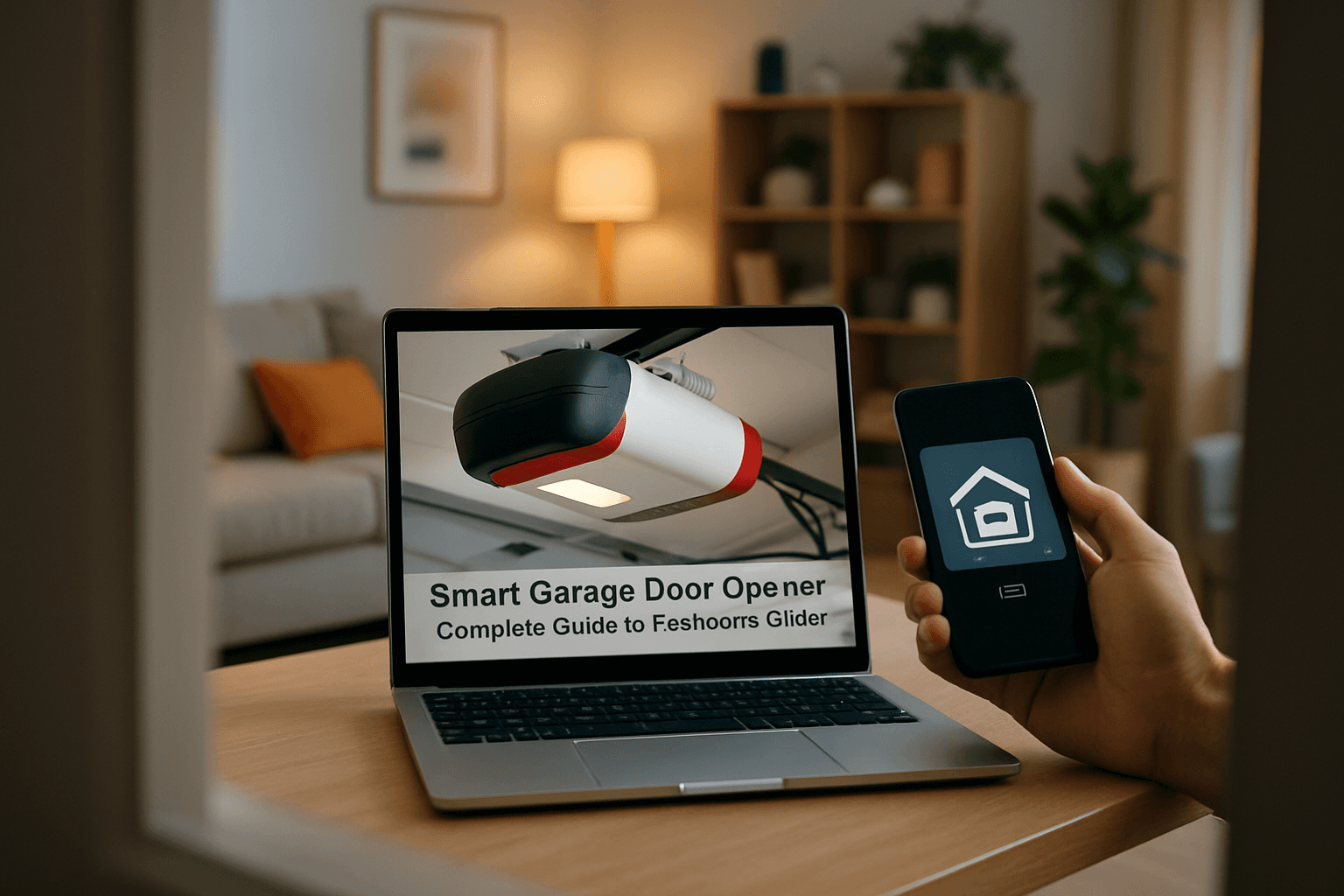
A smart garage door opener is a motorized unit that connects to your home's Wi-Fi network and allows for remote operation using a smartphone app, voice assistant, or smart home hub. These devices are typically integrated with smart home ecosystems, providing seamless control and automation options.
Unlike traditional openers that require physical remotes or wall buttons, smart garage door openers provide real-time alerts, scheduling capabilities and enhanced security features. A door position sensor confirms whether the door is actually open or closed, so you're not guessing from across town.
Key Benefits
Remote Access and Control
Whether you're at work, on vacation or simply in another room, you can easily check and control your garage door using your smartphone. This level of accessibility reduces stress and ensures that you never have to wonder if you left the garage door open. You can also share temporary access with family members, dog walkers, or delivery drivers without needing to hand over a remote or keypad code.
Enhanced Home Security
Many smart garage door openers include advanced security features that help homeowners better protect one of the main entry points to their home. Smart systems can send real-time notifications whenever the garage door is opened, closed, or left open for an extended period of time. Several of the best smart garage door opener systems include video monitoring features or integrate easily with existing home security cameras. That makes it easier to keep an eye on activity near your garage, even if you're across the country.
Activity Tracking and Automation
Some apps keep a log of when the door opened and closed, which is handy for keeping tabs on a busy household or knowing when the kids got home. Smart systems also support modern household patterns with multiple drivers, deliveries, rentals, and variable schedules by enabling time-based rules and shared access.
Compatibility: Will It Work With Your Current System?
Before purchasing a smart opener, verify compatibility with your existing setup—this is critical.
Most openers manufactured after 1993 include standard safety sensors, which many smart systems require. Most garage door opener brands are compatible with myQ technology if the model was manufactured after 1993. These garage openers will usually have safety sensor eyes.
You can usually find the learn button on your garage door opener on the back or side of the motor unit, sometimes hidden under a light cover. The button color matters:
- Purple, Red, or Orange Button: These openers typically use an older, but very common, security technology. Most smart controllers are designed to work with them.
- Yellow Button: This signifies a more modern system, like Chamberlain's Security+ 2.0. This technology is more secure, but it can also be more restrictive, so you need to ensure a smart controller explicitly states it's compatible with the yellow learn button.
Two Routes to Smart Control
Full Replacement
Some systems have smart features built into the opener, while others add them by installing a smart garage door controller onto an existing opener. Buying a brand-new smart opener with integrated features gives you the latest technology and broadest feature set, but it's the more expensive option.
Retrofit with a Smart Controller
In many cases, smart garage door openers can work with older systems. If you already have a garage door opener that works well, you might be able to upgrade it by adding a smart controller. These devices connect to your existing system and offer similar features to a full smart opener.
A smart garage door retrofit costs $36 to $220 and takes 15 to 45 minutes to install. If you're hoping for a more budget-friendly solution, consider a smart garage door controller which attaches to your existing opener. Installation is usually quick, and you can start enjoying remote control and activity alerts immediately. Keep in mind, though, that you may encounter compatibility issues, and the feature set isn't always as broad as with a full replacement.
Security and Safety Considerations
Is It Safe?
A smart opener can make your home more secure, as long as you use it sensibly. Modern models use rolling code encryption and secure app authentication to reduce hacking risks. Smart garage door openers typically use advanced encryption for data transmission to protect your privacy.
While no technology is completely immune to hacking, smart garage door openers employ encryption and authentication measures to mitigate the risk. By following best practices such as regularly updating firmware and using strong passwords, homeowners can enhance security.
Wi-Fi Reliability
Smart garage door openers rely on a stable Wi-Fi connection. If your internet goes down, you may lose app control and alerts — though most units still function with a manual wall button or remote. Make sure your garage has a strong and stable Wi-Fi connection. Smart garage door integration depends on steady internet access for instant commands and real-time alerts. Without it, even the best devices can't deliver consistent results.
Installation and Costs
Professional Installation
The cost to professionally install a garage door opener (including both the opener unit and installation labor) typically falls into these ranges:
- Typical total installed cost: $300 – $900+ for most standard units
- Mid‑range average: Around $500 – $800 for a quality unit and professional install
- Higher‑end systems: Up to $1,200 – $1,500+ for premium smart openers or specialty types
A professional installs a standard opener in about two to three hours, while a first-time DIY installation can take four to eight hours. Replacing an existing opener is faster than a first-time install that requires new wiring or mounting.
Smart Controller Add-Ons
Smart Wi-Fi connectivity adds about $50 to $150, and battery backup adds roughly $50 to $150 more. Most smart garage door devices cost between $30 and $100, and professional installation adds another $150 to $400 in labor charges. Doing it yourself means you pocket those savings while gaining hands-on knowledge of how your system works.
DIY Retrofit
Smart opener installation is safe for DIYers because it doesn't involve dangerous spring tension. However, if your opener needs repairs before adding smart features, call a professional for spring or cable work. Most people complete the installation in 45 to 90 minutes by following the compatibility checks, gathering proper tools, and working through the step-by-step process.
If you're not comfortable with DIY work, professional installation eliminates risk. Garage door openers involve electrical wiring and mechanical alignment that can affect safety and performance if done incorrectly. DIY may cut out labor but can jeopardize warranties or safety if not installed correctly.
Popular Smart Garage Door Opener Options
The Chamberlain myQ-G0401 smart garage door opener is noted as a refined version with quick setup and easy-to-use mobile app for iOS and Android. The BeamUP garage door opener is a fully functional 3/4 hp, chain-driven, DC-motor operated unit that comes complete with a bright, 1,500-lumen LED overhead light. The LiftMaster 84505R Secure View™ Ultra-Quiet Belt Drive Smart Opener features an integrated Secure View camera so you can monitor your garage remotely via the myQ app.
Final Takeaway
A smart garage door opener delivers real convenience and measurable security improvements. The main benefits are visibility, control, and fewer "did I leave it open?" moments, which directly reduce security risk and daily friction. Whether you retrofit an existing opener or replace it entirely, the key is ensuring compatibility with your current system and choosing a setup that matches your home's Wi-Fi strength and your automation preferences.