
Smart House Guide: Build Your Connected Home in 2026
What Is a Smart House?
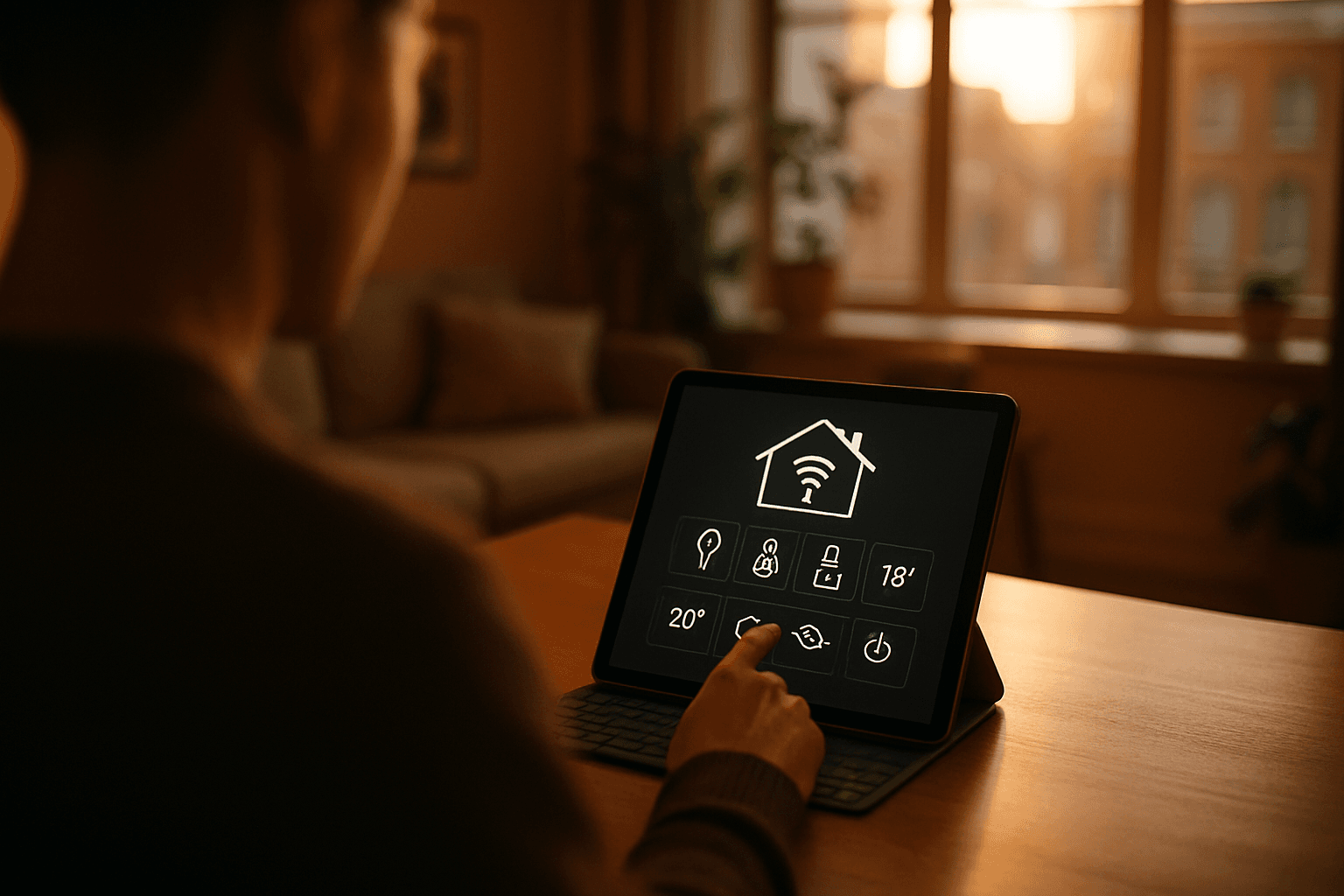
A smart home connects lighting, locks, thermostats, and security into one app-controlled system. More fundamentally, the automation layer is what separates a genuinely smart home from a house that just owns a pile of Wi-Fi gadgets. Once you add rules and routines, your home starts to anticipate you instead of waiting for instructions.
Smart home automation in 2026 is in a practical, not theoretical, phase. The basics work. Compatibility issues are far less painful than they were, and the cost of building a meaningful starter setup has dropped into reach for most households and small businesses.
Essential Smart House Devices
A complete smart home ecosystem spans several categories of devices:
Smart Lighting
Smart lighting systems can detect when occupants are in the room and adjust lighting as needed. Smart lightbulbs can also regulate themselves based on daylight availability.
Climate Control
A smart thermostat can learn your habits and automatically adjust the temperature based on your unique schedule.
Security
Cameras that record or notify you when motion is detected help you keep an eye on your property without physically being there. Door and window sensors can alert you to activity and can be set to trigger lights or alarms.
Smart Plugs
Smart plugs make ordinary devices part of your automated network. You can schedule a lamp to turn off, start a coffee maker in the morning, or power fans when temperatures rise. These plugs extend automation without replacing your devices.
Voice Control
Voice assistants like Google Assistant (often used with Google Home), Amazon Alexa, and Apple Siri provide hands‑free control of your smart home technology. You can speak commands to adjust lights, thermostats, or media, making control accessible and intuitive for all members of your household.
Key Benefits of Smart House Systems
Energy Savings
One of the most significant advantages of smart homes is energy savings. Intelligent energy management systems monitor and optimize the use of electricity, heating, and cooling, significantly reducing consumption and lowering bills.
Enhanced Security
Homes with integrated smart security systems report higher satisfaction with safety and monitoring compared with standalone alarm systems.
Convenience & Comfort
Smart home systems can be customized to suit your lifestyle. You can upgrade your smart home system to enjoy benefits such as:
- Flexibility: control devices through iPhone iOS, Android, or whichever system you prefer
- Security: smart home security devices can deter intruders and send you alerts
- Sustainability: keep an eye on your energy usage to keep bills down
- Value: smart homes typically attract higher prices thanks to their convenience
- Accessibility: voice assistants are ideal for those with mobility issues
Understanding Smart House Standards and Ecosystems
The 2026 update is Matter, an open standard backed by Apple, Google, Amazon, and Samsung that runs on top of Thread or Wi-Fi to let devices from different brands work together natively. This represents a major improvement over previous fragmented approaches.
For most people, Amazon Alexa or Google Home remain the easiest starting points. Matter compatibility has improved dramatically, meaning devices from different brands can finally work together without as much frustration.
Getting Started: Budget-Friendly Smart House Setup
The good news: you don't need to spend a fortune to start.
Minimum Starter Setup
Start with a smart plug ($15), one smart bulb ($10–$15), and a budget smart speaker ($25–$35). That gives you voice control, scheduling, and remote access — the three core features of any smart home — without spending more than a night out.
Realistic Costs
According to Angi's 2026 cost data, typical smart home systems run $200 to $1,525, with most homeowners paying around $777 for a setup of connected devices like a hub, smart thermostat, lighting, and a video doorbell. However, smart homes are increasingly accessible to all budgets, with starter kits and affordable individual devices making entry-level automation realistic for under $500.
Smart House Setup Tips for Beginners
Start Small and Expand Gradually
You must start by buying key items first like smart thermostats or a smart bulb. Once you get an idea of how these devices work, gradually add more devices depending on your budget and needs.
Choose Your Ecosystem First
Before buying a single light bulb or security camera, pick your ecosystem. This decision determines how everything works together. The three main options in 2026 are Amazon Alexa, Google Home, and Apple HomeKit. Each one works differently, supports different devices, and has different price points.
Solve a Real Problem
Choose one real problem in your home or business. Solve it with one or two well-chosen, Matter-compatible devices, and live with that setup.
Check Compatibility
Even in 2026, not every device plays nicely with every ecosystem. Always check compatibility before you buy — most product pages now clearly list which voice assistants and platforms they support.
Expect Setup Time
One honest note, though: "smart" does not mean "hands-off from day one." You will spend some time creating routines, testing triggers, and resolving the occasional glitch.
Security and Privacy Considerations
Smart houses collect substantial personal data, which raises legitimate concerns. The main challenge of smart homes is related to the large amount of security-critical and privacy-sensitive data they record from users. Because smart home devices are connected to the internet, they can be vulnerable to cyber attacks.
To protect your smart house:
- Use strong, unique passwords for all accounts
- Keep devices and apps updated with the latest security patches
- Consider local-capable devices that operate without constant cloud connectivity
- Add a small number of local-capable devices — Zigbee bulbs, a motion sensor, a plug — rather than many cloud-only gadgets. This keeps your setup private and expandable
Looking Ahead: The Future of Smart Homes
In 2026, the industry is undergoing a three-pronged transformation: communication standards between devices are finally converging, generative artificial intelligence is joining home voice assistants, and the home is beginning to be conceived as a true energy hub, not just a place to be automated for convenience.
The arrival of generative language models is changing this interaction: next-generation assistants understand more natural and nuanced requests ("make sure the house is ready for when I get back from the gym") and translate them into sequences of automations, rather than requiring single, pre-coded commands.
Final Thoughts
Building a smart house isn't about owning the latest gadgets—it's about solving real problems and creating a home that works for you. In 2026, smart home devices have become more affordable and compatible than ever, making it the perfect time for beginners to get started. Pick one problem, choose your ecosystem, start with affordable devices like smart plugs and bulbs, and expand from there. The technology is ready. Your connected home awaits.