
Wireless vs Wired Speakers Home Theater: Full Comparison
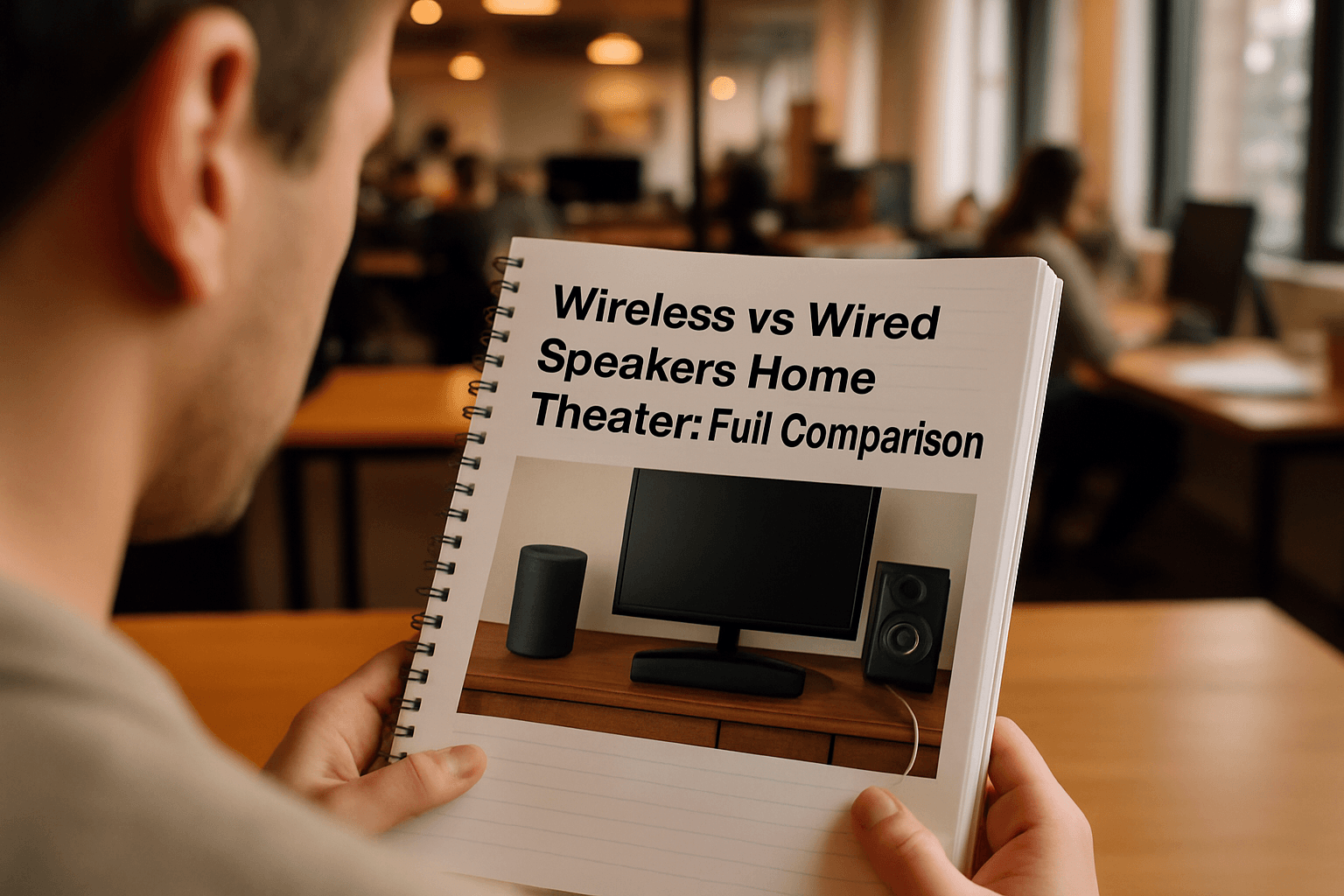
Audio Quality: Wired Speakers Still Lead
Wired speakers are known for their reliable, high-quality audio performance and can deliver a wider dynamic range and clearer sound, which is essential for a true cinematic experience. The wired connection generally provides a more reliable audio signal with minimal latency and no interference from wireless networks or devices, which is crucial for an optimal home theater audio experience.
That said, wireless technology has narrowed the gap significantly. Qualcomm's aptX Lossless is designed to deliver CD-quality lossless audio with compatible hardware, and Wi-Fi systems can support lossless and high-resolution streaming too, so the connection type alone doesn't determine how good a speaker will sound. Many Wi-Fi models support high-quality audio formats up to 24-bit/96kHz.
However, there's still a practical difference in how the technology limits performance. Wireless active speakers must include built-in amplification, DAC, wireless receiver, and often DSP processing in each speaker, which adds $50–$150 in component cost per speaker that could otherwise go into acoustic performance. For most listeners, a $1,500 wireless 5.1 system sounds excellent and is indistinguishable from a similarly priced wired system in casual listening. The quality gap only closes when you move to premium equipment.
Latency: The Hidden Problem with Wireless
Latency—the delay between sending an audio signal and hearing it—matters more for home theater than many people realize. Wired speakers have effectively zero latency, as the electrical signal travels through the cable at near light speed.
Wireless latency varies depending on technology. Modern wireless speaker systems designed for home theater (using WiSA, proprietary protocols, or dedicated wireless transmitters) achieve latency under 20ms, which is imperceptible for video sync, but Bluetooth speakers can have 100–300ms of latency depending on the codec. Modern codecs like aptX Low Latency, aptX Adaptive, and Sony's LDAC are designed specifically to reduce this delay, sometimes to under 40ms, which is generally imperceptible to the human ear.
For movies with built-in audio sync compensation, this usually isn't noticeable. Bluetooth can introduce a delay between the source and the sound reaching the speaker, but video playback can often compensate by delaying the picture to keep it in sync, though it's harder to mask in video games since the sound needs to react to what you're doing.
Installation and Cable Management
Setting up a wireless speaker system is typically straightforward, requiring fewer cables and less time. The absence of wires means greater flexibility in speaker placement and the ability to adjust the setup without concern for cable length and management.
This convenience comes with an important caveat: Unlike passive wired speakers that draw power directly from an amplifier, wireless speakers require built-in amplifiers and are often dependent on batteries or nearby power outlets. That means wireless speakers need their own power sources, limiting placement flexibility more than you might expect.
Wired speakers can create visual clutter from cables, and it can be hard to hide bulky wires when there are a number of them. However, the payoff is control: once installed, a wired system doesn't rely on network stability or power outlet proximity.
Reliability and Maintenance
A major advantage of wired speakers is their reliability—once installed, they provide a consistent and uninterrupted connection, free from lag or interference. Wired speakers maintain timeless compatibility and can last for decades, often preferred for their reliability over newer wireless technologies that may require more frequent upgrades.
Wireless systems introduce more variables. Wireless speakers depend on the stability of your wireless network, and interference from other devices and obstructions can affect performance. Wireless speakers require software updates, battery replacement, and network troubleshooting, and wireless systems involve more variables than simple wired connections.
Cost Comparison
At entry-level prices, the advantage goes to wired. With wired speakers, you can choose from a wide range of types and qualities, generally finding options that offer better performance per dollar spent than wireless speakers. Wireless speakers cost more upfront due to built-in wireless technology and amplifiers, but remember that wired systems need separate amplifiers, which adds to total cost.
High-quality wireless home cinema systems are often more expensive, while wired systems tend to be more affordable for the same sound quality but require extra cost considerations for installation. At the premium end, premium wireless systems overcome built-in cost limitations with higher price points and excellent engineering.
Flexibility for Upgrades
One clear advantage of passive wired systems is modularity—because the amplifier and speakers are separate, you can replace or upgrade one without rebuilding the whole setup, which matters when you're putting together a home theater system you expect to keep for years. Wired systems can provide more freedom to mix components, while wireless products may depend more heavily on a specific ecosystem.
Choosing Your Approach: Full Wired, Full Wireless, or Hybrid?
Wired speakers are the stronger fit for a permanent stereo or home theater system if you don't mind running cables, and passive models give you more freedom to replace the amplifier or speakers later while the wired connection avoids Bluetooth latency.
Wireless speakers make more sense when portability, easier placement or multi-room playback matters more than component-level upgrades. Many wireless speakers are compatible with smart home systems, allowing voice control and integration with other smart devices, which can enhance the user experience and add convenience to controlling your home theater system.
The middle path is gaining traction. A hybrid home theater system uses wired connections where they provide the greatest performance advantage and wireless technology where it adds convenience or flexibility, with front speakers, center channels, projectors, and displays hardwired for maximum reliability while rear surrounds or subwoofers may use wireless signal transmission. This gives you the best sound where it counts most (the front stage handles 70–80% of movie audio), the convenience of wireless where cable runs are hardest, and a total cost somewhere between full wired and full wireless—the pragmatic middle ground.
The Bottom Line
Your choice depends on what matters most. If sound quality and reliability are your priorities, wired speakers are often the better choice, but if you value convenience and a modern look, wireless speakers might be more appealing. The choice between wireless and wired speakers is no longer about sound quality alone—modern wireless speaker systems have closed much of the performance gap, making the decision more about priorities: convenience versus ultimate fidelity, clean aesthetics versus lower cost, flexibility versus reliability.