
Smart Housing: The Complete Guide to Building Your Automated Home
What Makes a Home "Smart"?
Smart housing refers to the integration of advanced technologies within homes to enhance the living experience, combining automation, energy efficiency, and security systems to create an intelligent living environment. A smart home in the US is any kind of home that uses internet-connected devices to power appliances.
The defining characteristic of a smart home is its ability to learn from the habits and preferences of its inhabitants through machine learning and artificial intelligence, providing personalized and efficient service. Smart homes operate in three steps: data collection (devices collect data from their environment, such as temperature, light levels, or the presence of people), data processing (this data is processed locally or in the cloud to make decisions), and action (based on these decisions, devices take action, such as turning on lights, adjusting temperature, or sending notifications).
Core Components of a Smart Housing System
A functional smart home typically includes several key device categories:
Smart Hubs and Voice Assistants
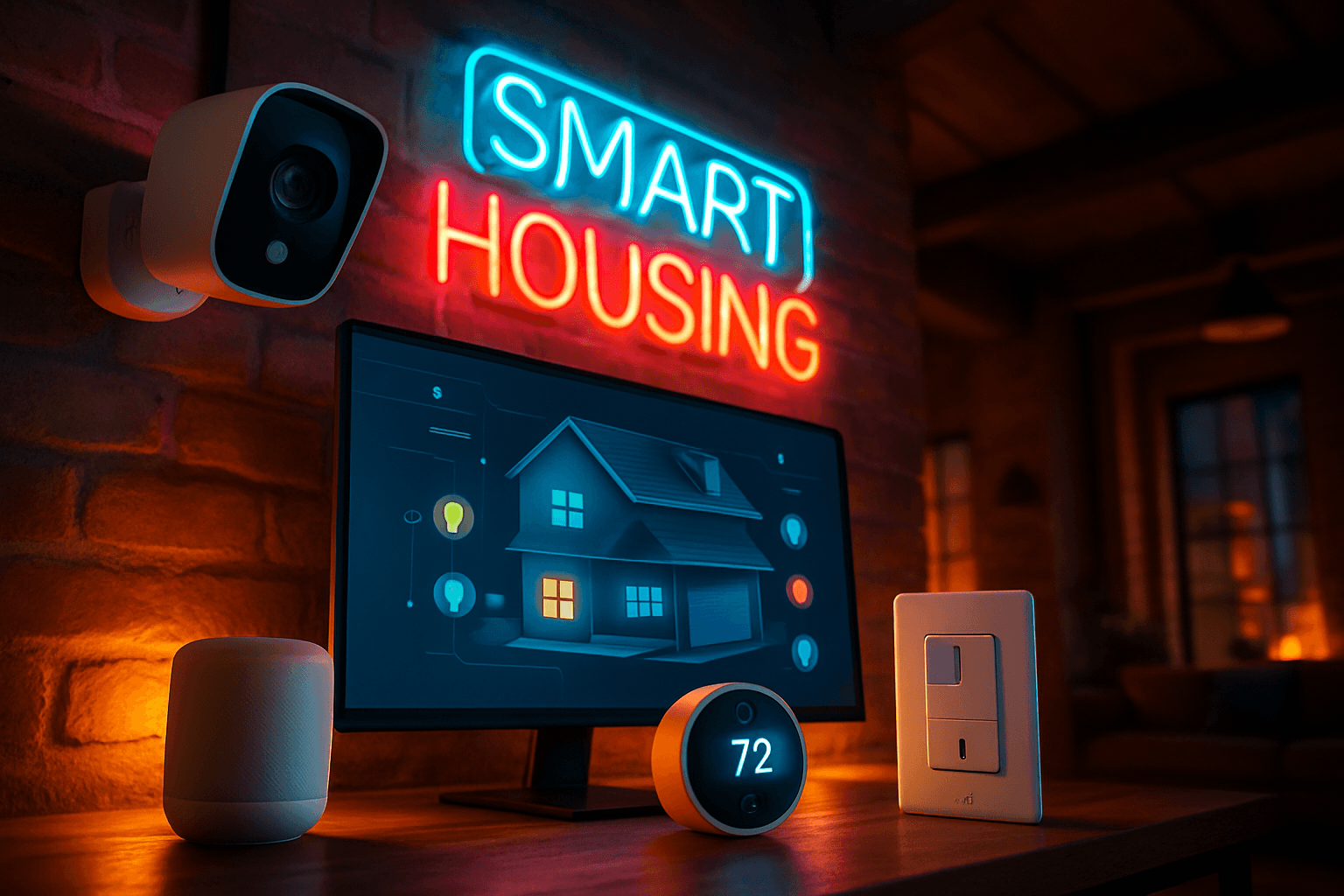
Smart hubs can connect and control various home automation devices such as lights, thermostats, security systems and appliances, acting like a central command center allowing users to manage their home's connected devices through a single interface. The three main systems recommended are Amazon's Alexa, Google's Google Home and Apple's HomeKit, which combine voice control and smartphone app control of your devices.
Smart Lighting
Smart lighting systems like the Philips HUE LED smart light system can change color and turn on and off with your voice, and can also adapt to your mood. Smart lighting systems contribute to sustainability by reducing energy waste, with timed schedules and motion sensors ensuring lights are only used when needed.
Smart Thermostats and Climate Control
Smart thermostats such as Google Nest can monitor your energy use and adjust temperatures based on your activity. A smart home system can learn homeowner behaviors to ensure the house is cooled down by the time they return home, instead of leaving the air conditioning on all day.
Security Systems
With smart security cameras and doorbells, such as Ring, residents can monitor their homes when they're away, and smart motion sensors can identify the difference between residents, visitors, pets and burglars and can send notifications to authorities if suspicious behavior is detected.
Smart Appliances
Smart refrigerators can track the items stored inside, as well as expiry information to reduce food spoilage and running out of ingredients, and homeowners can also create lists and access other features.
Key Benefits of Smart Housing
Energy Efficiency and Cost Savings
With home automation devices and a smart system setup, energy, water and other resources are used more efficiently, which helps save both natural resources and money for the consumer. Smart devices like thermostats and light sensors optimize energy use based on occupancy and time of day, while intelligent irrigation and plumbing systems can significantly reduce water consumption by monitoring use and detecting leaks.
Enhanced Convenience
The ability to customize and automate daily routines is a great advantage of smart homes. You can program specific scenarios, such as a "good morning" routine that opens the blinds, turns on the coffee machine, and sets the ideal temperature, all automatically, which traditional houses don't allow.
Improved Security and Remote Monitoring
Homeowners can remotely monitor the house from anywhere, allowing for regular check-ins, and installing a home security system appeals to a wide range of buyers, offering them added peace of mind.
Accessibility and Independence
For individuals with different physical abilities, smart homes may provide increased accessibility and independence through features like voice commands and smartphone app controls.
Higher Home Value
The benefits of investing in smart home technology include higher sale values, better security and energy efficiency.
Smart Housing Challenges to Consider
Despite the advantages, smart housing comes with important considerations:
Security and Privacy Concerns
Insecure devices, weak passwords, insecure networks, lack of updates, privacy concerns, physical security, social engineering attacks, and zero-day attacks all play a role in making your smart home vulnerable. The main challenge of smart homes is related to the large amount of security-critical and privacy-sensitive data they record from users. Consider using a password manager to protect your smart home accounts and setting up a VPN on your router for enhanced security.
Compatibility Issues
The main security challenge posed by smart home setups is the nature of their network, with recent approaches seeing the interaction of several different devices from multiple manufacturers in an ad-hoc manner, which opens the smart home to a greater threat landscape with a much larger attack surface area.
Technical Complexity
Home automation systems have become increasingly complex, and without a thorough understanding of how they work as a whole and how each device works with each other, you may compromise your security or privacy.
Smart Housing Costs
According to Angi's 2026 cost data, typical smart home systems run $200 to $1,525, with most homeowners paying around $777 for a setup of connected devices like a hub, smart thermostat, lighting, and a video doorbell. However, costs vary significantly based on your needs:
- DIY options start at just $50 for basic devices if you want to start small
- A basic starter smart home setup typically costs between $200–$500 for essential devices
- You can expect to spend around $2,000-$5,000 on average to deck out your home with automation, with DIY kits starting as low as $500 for basic functions, while pro-installed systems with whole-home control can run over $10,000
- Popular upgrades include smart security cameras and video doorbells at $100 to $400 per device, smart thermostats and climate control at $100 to $300 each, and smart plugs at $20 to $100 per device
Professional installation adds to cost but brings expertise and peace of mind, with electricians, home automation specialists, and security installers charging labor rates ranging from $50 to $150 per hour, or flat fees for larger jobs.
Getting Started with Smart Housing
Starting a smart home doesn't require a massive upfront investment or technical expertise:
Step 1: Assess Your WiFi
The foundation of any smart home is strong and secure Wi-Fi that blankets the space and keeps smart home devices running smoothly. To keep multiple devices running without interruption, choose a Wi-Fi router that can deliver sustained high speeds to 50 or more devices, and if there are wireless dead zones in your home, consider upgrading to a mesh Wi-Fi network.
Step 2: Choose Your Platform
Choosing a platform, such as Amazon Alexa, Google Home, or Apple HomeKit, ties every device together in one app and unlocks voice control.
Step 3: Start Small
Smart bulbs and plugs are the best introductory connected devices for home automation because they're easy to install and quickly add convenience. Starting with a few devices is also the recommended approach if you're setting up a smart home on a budget. Smart plugs and smart bulbs are among the easiest first devices for beginners, since they install quickly and show results right away, and you do not need a hub to get started.
Step 4: Set Up Devices
Most smart home devices set up in minutes through a companion app, with no wiring or installer visit required. To install a smart home device, start by downloading the companion mobile app on your phone or tablet, then put the gadget in pairing mode according to the instructions provided and connect it to your Wi-Fi network.
Step 5: Create Automations
Create custom scenes or presets to control multiple devices with a single command or tap. For instance, you can set up a "Good Morning" scene that simultaneously turns on the lights, adjusts the thermostat, and starts brewing your morning coffee, all with the touch of a button or voice command.
Security Best Practices
Make sure your Wi-Fi network is password protected and uses the latest encryption options, which goes a long way in allaying security fears and making sure no one can hack your devices.
The Future of Smart Housing
The Matter 1.4 protocol is set to revolutionize smart home integration by ensuring devices from different manufacturers can work together seamlessly, introducing enhancements such as Enhanced Multi-Admin, Matter-certified Home Routers and Access Points, and expanded energy management features.
Smart housing is no longer a luxury—it's an increasingly accessible way to improve comfort, security, and efficiency in your home. Whether you start with a single smart bulb or plan a fully integrated system, the key is choosing devices that align with your needs and budget while maintaining strong security practices.